



Paphos Archaeological Sites – Complete Guide to History, Ruins and Landmarks
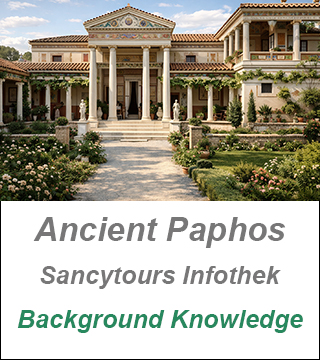 The Paphos Archaeological Sites in the region of Paphos in Cyprus offers one of the most complete historical landscapes in the Mediterranean.
The Paphos Archaeological Sites are not limited to a single monument or ruin but form a connected historical area that reflects more than two thousand years of continuous development.
What makes these Paphos Archaeological Sites so remarkable is the way political power, mythology, daily life and coastal defense all come together in one place.
Paphos Archaeological Sites
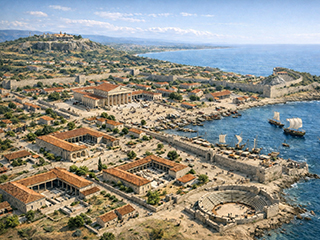 At the center of this historical landscape lies the Paphos Archaeological Sites – the Park, which represents the former urban core of the ancient city during the Roman period. When Cyprus became part of the Roman Empire in the 1st century BC, Paphos was established as the administrative capital, and this status led to the construction of impressive residences and public buildings.
Within the park, the Paphos Archaeological Sites, remains of several Roman villas reveal how the elite once lived. The House of Dionysos, built in the 2nd century AD, is famous for its mosaics, which depict scenes from mythology centered around Dionysos, the god associated with wine, celebration and transformation. These mosaics were more than decoration; they were a way for the owner to demonstrate education, wealth and cultural identity. In a society where mythology was widely understood, such imagery communicated status and intellectual connection to the Greco-Roman world.
Nearby, the House of Theseus reflects political authority. Theseus, the legendary hero who defeated the Minotaur, symbolized the triumph of intelligence and order over chaos. The villa itself, likely used by the Roman governor of Cyprus, was designed on a much larger scale than surrounding houses. Its architecture, with large courtyards and formal spaces, emphasized control and hierarchy, mirroring the role of its occupant as representative of Roman power on the island.
A different atmosphere emerges in the House of Aion, which dates to the 4th century AD. Aion represents eternal time and cosmic cycles rather than a traditional god with human characteristics. The mosaics here are more complex and philosophical, reflecting a period when Roman culture was beginning to change and absorb new ideas. This transition can be seen in the symbolic imagery, which focuses less on heroic myths and more on deeper concepts of existence, continuity and transformation.
As well you can visit inside Paphos Archaeological Sites a place where Public life in the ancient city is represented by the small Odeon, built in the 2nd century AD. This theatre was used for musical performances, recitations and gatherings, indicating that cultural activities were an integral part of urban life. Its relatively modest size suggests that events held here were intended for a more select audience, reinforcing the idea of a socially structured and refined society.
Just beyond the theatre, the remains of the Saranta Kolones Fortress introduce a completely different phase in the history of the Paphos archaeological sites. Constructed in the 7th century AD during the Byzantine period, the fortress was part of a defensive system designed to protect the harbor from Arab raids. Built using columns and stones taken from earlier structures, it reflects a time when survival and defense became more important than monumental display. Although it may have been used in coastal conflicts, its destruction came not through battle but through a powerful earthquake in 1222, which left it in ruins.
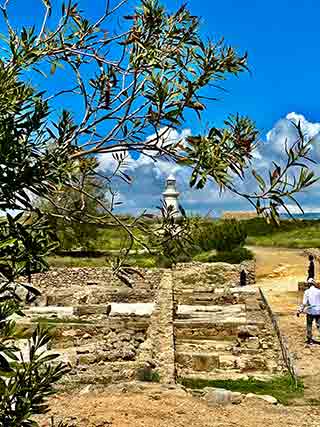 Moving Paphos Archaeological Sites toward the coast, the Paphos Lighthouse marks the continuation of Paphos as a maritime hub. The current lighthouse was constructed in 1888 during British rule to guide ships safely along the coastline. Its position near ancient harbor zones highlights the long-standing importance of sea routes for trade, communication and control. Even in antiquity, similar locations would have been used for signaling and navigation, although in much simpler forms.
A short distance from the Paphos Archaeological Sites, the Tombs of the Kings offer insight into beliefs about death and status in the Hellenistic period. Dating back to the 3rd century BC, these tombs were created long before Roman rule, when Cyprus was under the influence of the Ptolemaic kingdom of Egypt. Despite their name, they were not used for kings but for high-ranking officials and members of the elite. Their monumental design, with courtyards and columns carved directly into the rock, reflects the idea that the dead would continue their existence in a setting similar to their life on earth. While specific names of those buried here are largely unknown, their social position and likely connection to administration and military authority underline the strategic importance of Cyprus during this era.
Next to Paphos Archaeological Sites
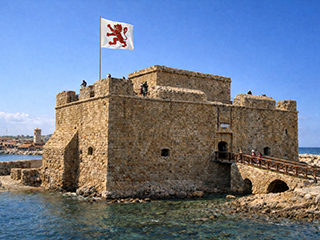 Following the coastline further, the modern promenade links these ancient locations with the harbor area, where the Paphos Castle stands as a symbol of the city’s continued importance through the Middle Ages. Originally built as a Byzantine fort and later modified by successive rulers, including the Lusignans and Ottomans, the structure served multiple purposes over time, from defense to storage. Its presence demonstrates that the story of the Paphos archaeological sites did not end with antiquity but continued to evolve through changing political and cultural landscapes.
Taken together, the Paphos Archaeological Sites form a continuous narrative rather than isolated attractions. From Hellenistic burial traditions to Roman urban life, from Byzantine defense systems to modern maritime navigation, each element contributes to a broader understanding of how this region developed over centuries.
Experiencing these places without context often means seeing only fragments. With Sancytours, visitors can explore all major Paphos Archaeological Sites in a structured and personalized way. A private guide connects the individual locations into a coherent story, explaining not only what can be seen but why it exists, how it was used and what it reveals about the people who lived here.
Conclusion – Discover the Paphos Archaeological Sites
The Paphos Archaeological Sites offer a unique journey through history, combining ancient villas, monumental tombs and coastal landmarks in one remarkable destination. Exploring the Paphos Archaeological Sites allows visitors to understand how different civilizations shaped Cyprus over thousands of years. From Roman mosaics to underground necropolises, the diversity of the Paphos Archaeological Sites makes them one of the most fascinating cultural experiences on the island. To fully appreciate the depth and stories behind the Paphos Archaeological Sites, a guided tour with Sancytours provides valuable insight and a truly memorable experience.
Book Your Tour to the Paphos Archaeological Sites
If you want to experience the full depth of the Paphos Archaeological Sites, booking a guided tour is the best way to explore these unique locations. A private tour allows you to visit multiple Paphos Archaeological Sites in a comfortable and flexible way, without missing important details. With Sancytours, you can discover the most important Paphos Archaeological Sites at your own pace while gaining deeper insights into their history, meaning and cultural significance. Turn your visit into a personal journey and book your individual experience to explore the Paphos Archaeological Sites with an expert guide.
📸 Photo Copyright Notice
All images of the Paphos Archaeological Sites are protected by copyright. Any use, reproduction or distribution without prior written permission from Sancytours is strictly prohibited.
Why the Paphos Archaeological Sites Are a Must-Visit
The Paphos Archaeological Sites are among the most important cultural attractions in Cyprus and offer visitors a unique combination of history, architecture and landscape. Exploring the Paphos Archaeological Sites means discovering different historical periods in one connected area, from ancient tombs to Roman villas and coastal landmarks. What makes the Paphos Archaeological Sites especially remarkable is the way these locations are preserved and accessible, allowing visitors to experience history in an authentic environment. For anyone traveling to Cyprus, visiting the Paphos Archaeological Sites is an essential experience that combines education, culture and unforgettable impressions.
Author: Jürgen Derichs am 18. Apr 2026 10:03, category: Infothek – Historical Sites, comments per feed RSS 2.0, comments closed.