


Kykkos Monastery – The Icon, Bell Tower and Tomb of Makarios III
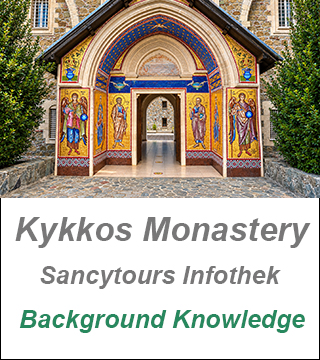 Kykkos Monastery is one of the most important Orthodox monasteries in Cyprus.
Its painted galleries and gilded mosaics tell stories of emperors, monks and pilgrims. At the heart of the monastery is a revered icon of the Virgin Mary, which has drawn pilgrims for centuries.
For visitors interested in religious art and Cypriot history, Kykkos Monastery brings together a Byzantine foundation, a hilltop shrine and the final resting place of Cyprus’s first president.
Where Is Kykkos Monastery?
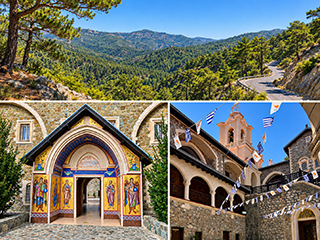 Kykkos Monastery stands above the Marathasa Valley in the western Troodos Mountains, about 13 kilometres from Pedoulas. At around 1,318 metres above sea level, it sits among wooded ridges. Along the way, bends in the mountain road reveal views across the valleys.
The monastery and Throni are two separate stops. First, visit the church, courtyards and bell tower. Then continue to the nearby hilltop, where a path links the memorial to Makarios III with his tomb and the shrine of the Virgin Mary.
Who Founded Kykkos Monastery and Why?
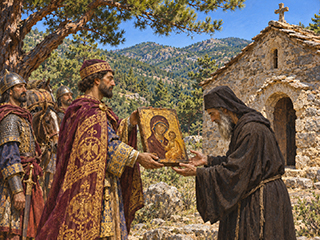 Byzantine Emperor Alexios I Komnenos founded Kykkos Monastery around 1100. According to monastery tradition, a Cypriot hermit named Isaiah healed the emperor’s daughter. In return, Isaiah asked for an icon of the Virgin Mary from the imperial palace in Constantinople. The emperor sent the icon to Cyprus and funded a monastery to house it.
A fire damaged the monastery in 1365, and another destroyed it in 1541. After the second fire, the monks rebuilt the complex in stone. Further fires and repairs shaped the buildings visitors see today.
The Church, the Icon Shrine and the Mosaics
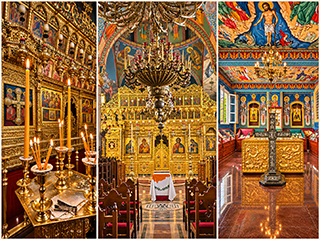 The monks rebuilt the church in stone after the fire of 1541. At first, it had a single aisle. In 1745, they added two side aisles, giving the church its three-aisled layout.
Inside, look for the ornate shrine in front of the iconostasis, the screen that separates the sanctuary from the rest of the church. The shrine holds the Panagia Kykkotissa, the icon of the Virgin of Kykkos. Tradition attributes the painting to Saint Luke. Today, a silver-gilt cover conceals the painted image.
Afterwards, follow the covered galleries. Their mosaics and wall paintings depict scenes from scripture and the monastery’s history. For example, a mosaic near the entrance shows Saint Luke painting the icon. The monastery museum also houses historic icons, manuscripts and objects used in worship.
The Bell Tower and Its Six Bells
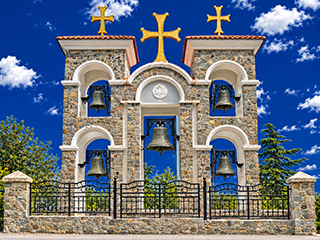 The monastery added its bell tower in 1882, a few years after British administration began in Cyprus. During Ottoman rule, Christians at Kykkos could not ring church bells. Consequently, the tower belongs to a much later period than the stone church beside it.
For example, the largest bell came from Russia and weighs about 1,280 kilograms. From the well in the lower courtyard, look up to see how the tower rises above the surrounding roofs.
The Hilltop Shrine at Throni
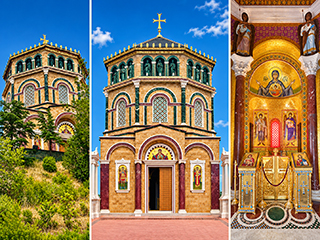 In 1935, a permanent pavilion replaced the wooden throne on the hilltop. In 1977, a new, chapel-shaped shrine took its place. Architect Andreas Philippou designed the newer structure, combining Byzantine and modern elements.
The name Throni tis Panagias means “Throne of the Virgin Mary”. During droughts, monks carried the icon of the Virgin from Kykkos up to the hilltop and prayed for rain. Today, mosaics line parts of the approach. Once you reach the shrine, take a moment to look across the wooded ridges.
The Mausoleum of Archbishop Makarios III
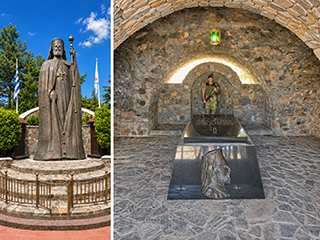 In 1975, Archbishop Makarios III commissioned architect Andreas Philippou to design his tomb at Throni. Before becoming Archbishop and the first President of the Republic of Cyprus, Makarios entered Kykkos as a young novice. He chose a resting place close to the monastery where his religious life began. He died on 3 August 1977, and his burial at Throni followed a few days later.
The tomb lies in a low, vaulted stone chamber set into the hillside. From there, you can continue on foot to the bronze statue of Makarios and the nearby shrine.
Is Kykkos Monastery Still in Use?
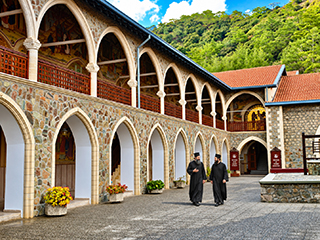 Kykkos remains an active Orthodox monastery. Monks live and worship here, and pilgrims continue to come to honour the Virgin Mary. Two important dates are 15 August, the Dormition of the Virgin, and 8 September, the feast of her birth.
During your visit, dress modestly and follow the signs in the church and museum. Afterwards, take time to explore the courtyards and covered galleries, where many of the mosaics are easy to see outdoors.
Kykkos Monastery Photo Gallery
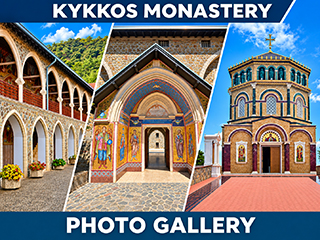 Explore our Troodos Photo Gallery for views of Kykkos Monastery and the mountain scenery around it. Start with the wider photographs to see how the buildings sit among the wooded ridges. Then look for smaller details, from the stone arches around the courtyards to the colour and texture of the mosaics. The gallery gives you a closer look at details you might pass on your first walk through the monastery.
Book Your Private Kykkos Monastery Tour
 Join SancyTours on a Private Kykkos Monastery Tour through the Troodos Mountains. At Kykkos, take time to explore the courtyards and mosaic galleries, see the bell tower and visit the church. Afterwards, continue to Throni for the hilltop shrine and the mausoleum of Makarios III. If you are especially interested in religious history, architecture or photography, tell us when you enquire so we can allow more time for the stops that interest you most.
Check the weather before your Cyprus adventure

View the official forecast for the coast, mountains and inland areas.
View the Cyprus Weather Forecast
Author: Jürgen Derichs am 28. Nov 2026 07:12, category: Infothek – Historical Sites, News from our tours and events, comments per feed RSS 2.0, comments closed.