


Donkeys of Cyprus – From Village Work to the Karpaz Peninsula
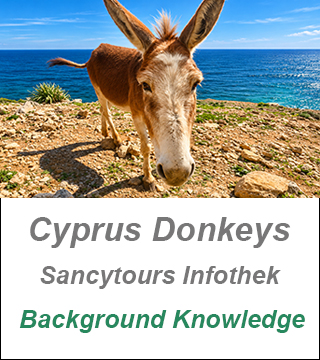 A donkey can stop in the middle of the road, turn its long ears towards your car and take its time deciding whether to move. Today, a moment like this might be the part of a day out you remember best.
For centuries, however, donkeys were an everyday part of life on Cyprus. Families counted on them to carry the harvest, bring supplies home and follow steep paths with a load on their backs. When engines took over much of that work, the donkey’s place in island life changed. You can still see traces of its old role in a Bronze Age figurine with baskets on its back. And when you stand face to face with a donkey today, you get to meet the animal behind that long history.
How Did Donkeys Reach Cyprus?
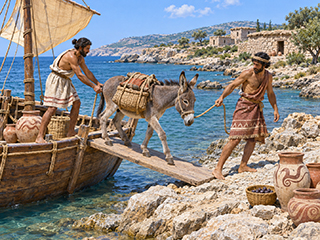 People probably brought donkeys to Cyprus by boat from Anatolia early in the Bronze Age, around 2400 BC. Their arrival was part of a wider change in farming. Cattle and the plough appeared around the same period. Meanwhile, donkeys made it easier to move what people grew.
A small clay figurine from Bronze Age Cyprus gives us a glimpse of that work. It shows a donkey with a large basket on either side of its back. Those baskets tell a familiar story. Once the harvest was in, someone still had to carry it from the field to the village or market.
Why Donkeys Mattered to Village Life
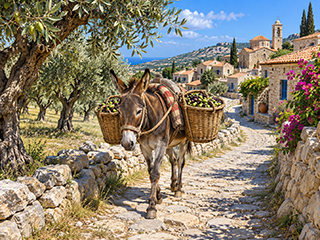 A donkey could follow narrow, stony paths with a load on its back. For example, it could carry olives from the grove or take grain to the mill. On the return journey, the same animal might carry a person home. For a farming household, keeping a donkey meant being able to move people and produce along routes where a cart was awkward to use.
Over time, tractors and trucks took over much of that work. However, the donkey’s place in the island’s history is still easy to picture. Think of a steep path between an olive grove and a village, and how many trips it would take to bring in a harvest by hand.
The Free-Roaming Donkeys of Karpaz
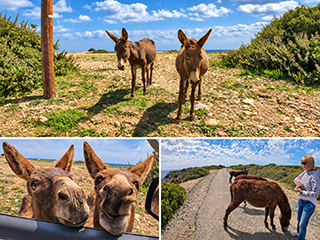 The Karpaz Peninsula, in the far northeast of Cyprus, is home to the island’s best-known free-roaming donkey herds. They descend from domestic working animals. By the 1970s, machinery had taken over many of their former jobs. In addition, the upheaval and displacement of that decade left animals behind. Over generations, their descendants became part of the peninsula’s landscape.
The donkeys are among the largest land mammals you can encounter roaming freely on Cyprus. Sometimes you spot them grazing among the trees. At other times, a group is already standing in the road. A curious donkey may even come close enough for you to see it eye to eye through the car window.
Meeting the Donkeys at Golden Donkeys Farm
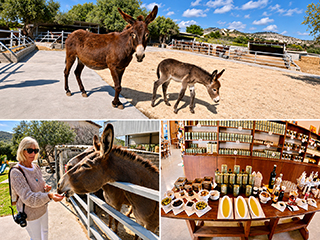 At Golden Donkeys Farm in Skarinou, you can spend time with the animals at a gentler pace. During our visit, you can stroke and feed the donkeys with guidance from the farm team. It is a chance to see how each one responds when someone approaches. One may come straight over, while another takes a little longer.
We also include a tasting during the visit. Depending on the selection, you can try farm products such as donkey milk and organic olive oil. Afterwards, you may find that the taste of the milk is as memorable as meeting the animals themselves.
Karpaz Photo Gallery
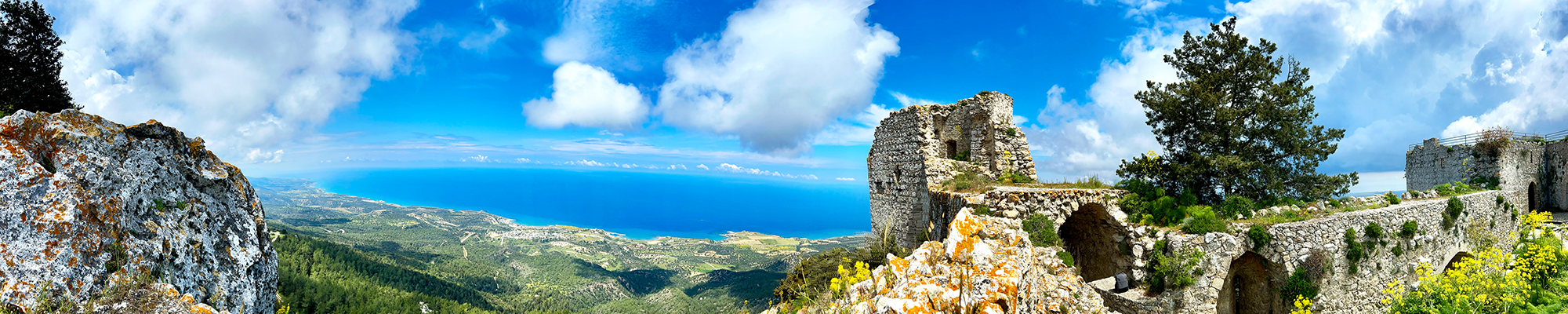
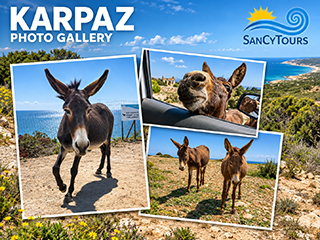 Explore our Karpaz Photo Gallery to see the landscape these donkeys roam. Forested hills give way to open stretches of coast, and the dunes behind Golden Beach show a different side of the peninsula. As you browse, look at the spaces between the better-known stops, too. A quiet stretch of road or a patch of shade beneath a tree may be where you first spot a donkey.
Book a Private Tour to Meet the Donkeys of Cyprus
 Choose the Golden Donkeys Farm visit if you would like to stroke and feed the donkeys and enjoy a tasting. We combine the farm with a visit to Lefkara and a stop at an olive farm on our private tour.
Explore the Olive Farm, Lefkara and Donkey Farm Tour
Alternatively, join our Private Karpaz Tour to see donkeys roaming freely. When we come across them, we take time to watch them. The route also takes in Apostolos Andreas Monastery and the coast, so you can see more of the peninsula in the same day.
Author: Jürgen Derichs am 22. Nov 2026 12:26, category: Infothek – Nature of Cyprus, News from our tours and events, comments per feed RSS 2.0, comments closed.