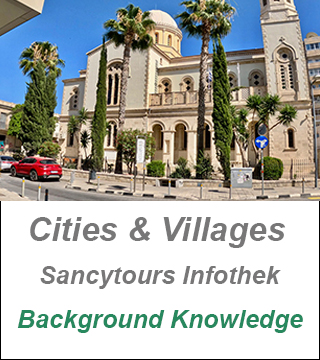
 Cities and Villages Cyprus are where the true character of the island becomes visible. In this Infothek section dedicated to Cities and Villages Cyprus, we share deeper background knowledge about Cyprus’ most interesting towns and villages — beyond what a standard guidebook usually tells you. Here you’ll learn what makes each place unique: history, architecture, traditions, local culture and the everyday rhythm of island life.
The beauty of Cities and Villages Cyprus lies in contrast. Cyprus is small, yet incredibly diverse: lively harbours and promenades meet quiet mountain villages, modern cafés sit beside old stone houses, and traditional craft still survives in narrow streets where time feels slower. This Infothek section helps you understand Cyprus through its settlements — because every town and every village tells a different story.
Explore Cities and Villages Cyprus with SancyTours
Many places featured in our Cities and Villages Cyprus Infothek can be explored on private tours with SancyTours. We guide you beyond standard routes, adapt the experience to your interests, and combine the most beautiful spots with hidden places away from crowds.
For inspiration, don’t forget to explore our gallery and see real impressions from our tours across Cities and Villages Cyprus.




Cities and Villages Cyprus – From Coastal Towns to Mountain Life
Some Cities and Villages Cyprus feel energetic and Mediterranean, shaped by the sea, trade and cultural exchange. Others feel peaceful and rooted, surrounded by vineyards, pine forests and hills. In our Infothek entries about Cities and Villages Cyprus, you will discover what each place is known for — not only “what to see”, but why it matters.
You’ll find background on:
- old town quarters and historic centres
- religious landmarks and local traditions
- craft villages, local food culture and daily life
- scenic viewpoints and hidden corners
- cultural contrasts across the island
Cities and Villages Cyprus – More Than Sightseeing
Exploring Cities and Villages Cyprus is not only about landmarks — it’s about atmosphere. It’s the sound of small cafés in the morning, the texture of stone walls heated by the sun, the smell of bread and herbs, and the feeling of stepping into real island life. This is why Cities and Villages Cyprus is one of the most rewarding themes for travellers who want depth rather than speed.
Our Infothek articles help you choose the places that match your travel style: authentic villages, cultural towns, quiet corners, historic streets or lively harbour vibes.
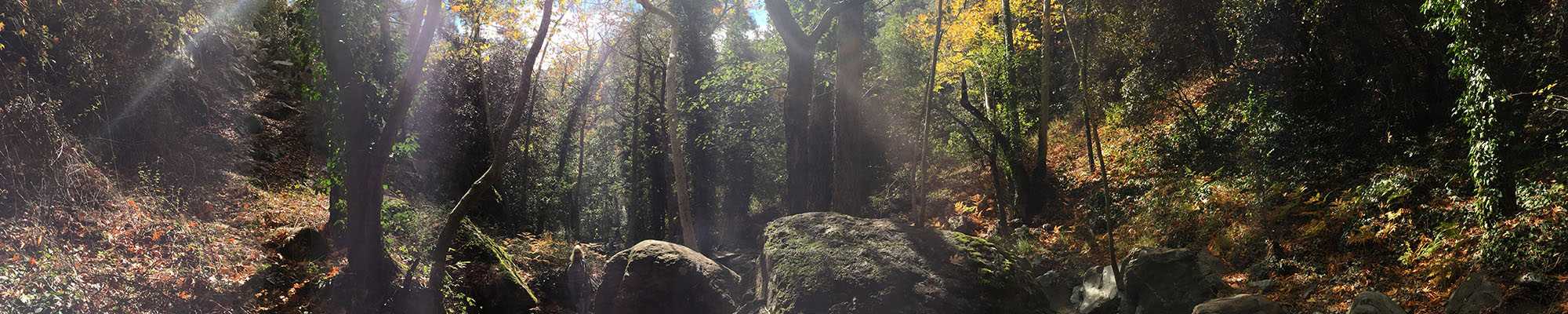
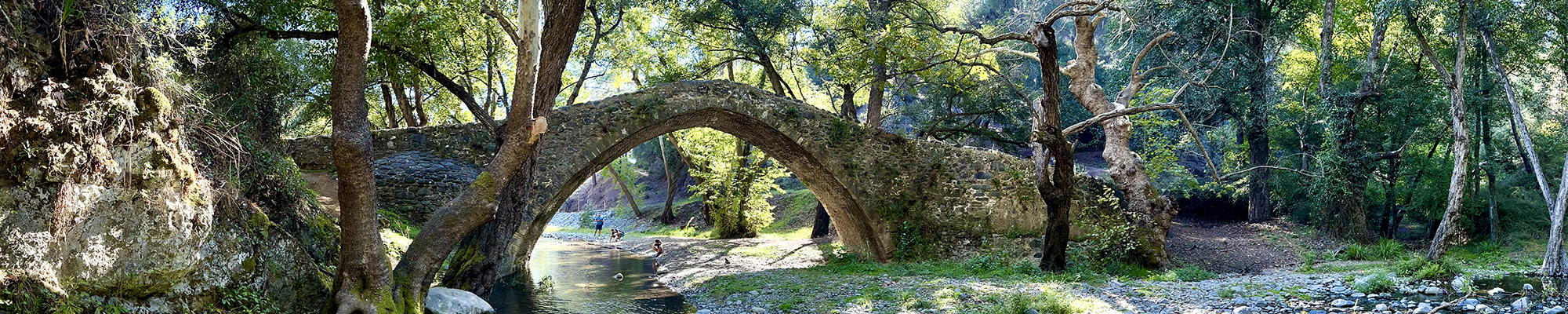
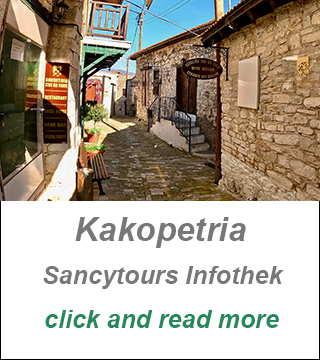
 Kakopetria Cyprus is one of the most charming mountain villages in the Troodos range, known for its fresh climate, flowing rivers and traditional architecture.
Located at the edge of pine forests and crossed by mountain streams, Kakopetria Cyprus offers a refreshing contrast to the coastal regions of the island.
For visitors seeking authentic village life, nature and cultural depth, Kakopetria Cyprus is a place where history and everyday life still move at a gentle pace.
more »
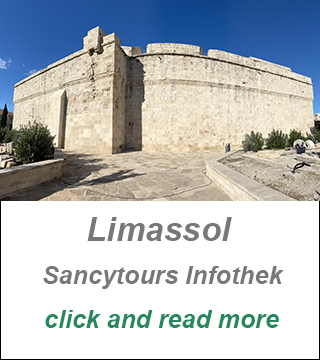
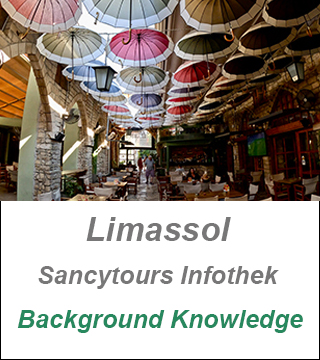 Limassol Cyprus is the island’s most dynamic and cosmopolitan city, where ancient history meets modern lifestyle. Located on the southern coast, Limassol Cyprus has developed into a vibrant cultural, economic and social centre, offering a unique contrast to Cyprus’ quieter villages and resort towns.
For visitors who want to experience Cyprus beyond classic sightseeing, Limassol Cyprus reveals a city full of movement, creativity and atmosphere — shaped by its long maritime history and its modern role as an international hub.
more »
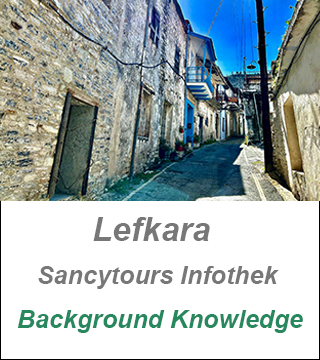 Lefkara Cyprus is one of the most picturesque and culturally rich villages on the island. Nestled in the foothills of the Troodos Mountains, Lefkara Cyprus is famous for its traditional craftsmanship, historic stone architecture and deep-rooted village traditions that have been preserved for centuries.
Often described as one of the most authentic villages in Cyprus, Lefkara offers a unique blend of history, culture and everyday rural life. Unlike many destinations shaped primarily for tourism, Lefkara has retained its genuine character, making it a place where visitors can truly experience the soul of the island.
more »
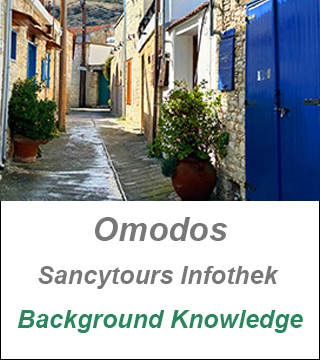 Among the many traditional villages that shape the cultural identity of Cyprus, Omodos Village stands out as a place where history, craftsmanship and everyday village life remain deeply connected. Located in the southern foothills of the Troodos Mountains, Omodos Village offers visitors an authentic glimpse into rural Cyprus, far removed from the island’s coastal resorts.
This entry in the SancyTours Infothek focuses on destinations that reflect the cultural soul of the island — and Omodos Village is one of the finest examples. Its atmosphere, traditions and warm hospitality make it a village that leaves a lasting impression long after the visit ends.
more »
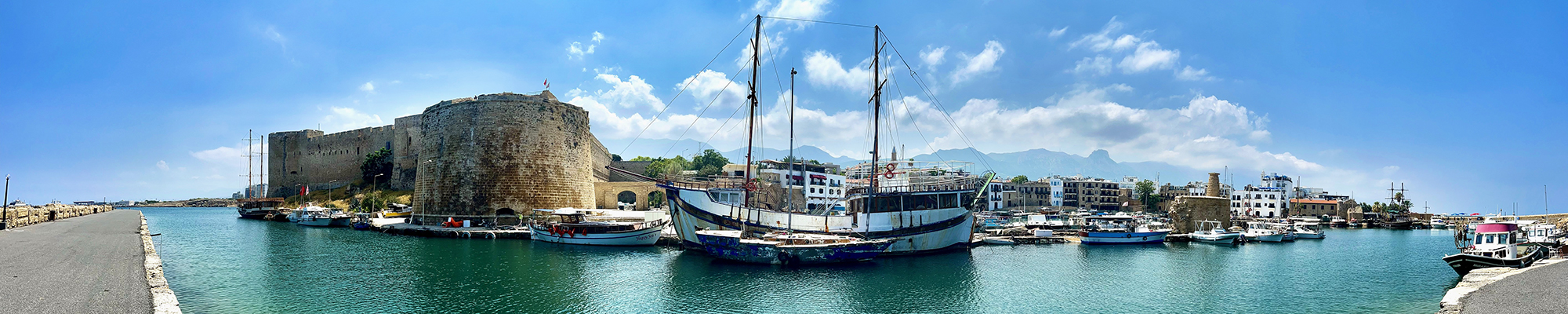
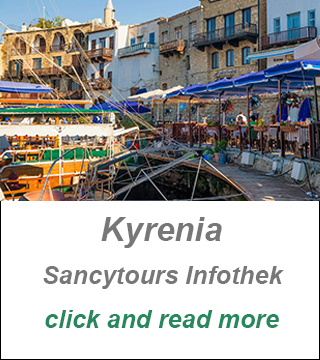
 Kyrenia Cyprus – Castles, Harbour & Timeless Mediterranean Heritage
Among Cyprus’s most iconic coastal towns, Kyrenia Cyprus captivates visitors with its unique blend of history, architecture and Mediterranean charm. Set along the northern coastline, Kyrenia Cyprus combines a picturesque harbour with dramatic mountain backdrops, making it one of the most atmospheric destinations on the island.
For travellers seeking more than beaches, Kyrenia Cyprus reveals a layered past shaped by ancient settlers, medieval rulers and maritime trade. This SancyTours Infothek entry explores the deeper historical and cultural significance of Kyrenia Cyprus, far beyond what travel brochures usually show.
more »
Nicosia Cyprus stands as a city of profound historical depth and cultural richness.
As the world’s last divided capital, it offers a unique tapestry of experiences, blending ancient landmarks with contemporary life.
For travelers seeking to understand the island beyond the beaches, Nicosia reveals Cyprus at its most complex and compelling. In this Sanyctours Infothek entry, we delve into the city’s layered identity—its monuments, markets, and moments that continue to shape both past and future.
more »
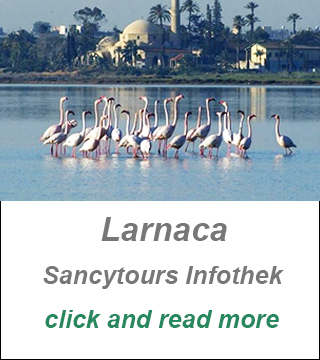
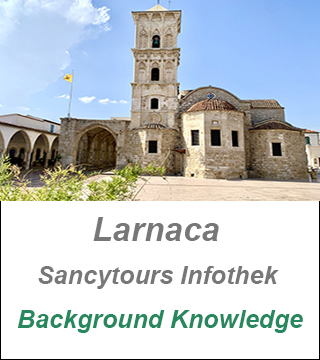 Larnaca Cyprus is a city with a long and eventful history, where ancient heritage and modern life blend in a remarkably authentic way. Located on the south coast of the island, Larnaca Cyprus is known for its palm-lined promenade, relaxed atmosphere and cultural depth. Despite its many hotels, Larnaca has never become a purely touristic centre and has preserved a strong local character.
For visitors who want to explore Cyprus beyond beaches and resorts, Larnaca offers a rich mix of historical landmarks, religious monuments and unique natural sites. Old neighbourhoods, modern cafés and centuries-old traditions exist side by side, giving the city a calm but vibrant rhythm.
more »
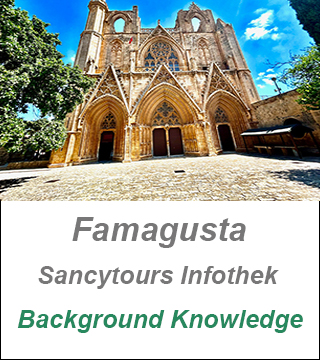 The city Famagusta Cyprus was founded around 274 BC by Ptolemy II after Salamis had been severely damaged by an earthquake. Arsinoe was described in the first century BC by Strabon in his Geographica as a „fishing town“. It remained a small fishing village for a long time. Later, when Salamis was gradually cleared during the Arab invasion under Muawiyah I, it developed into a small port.
The turning point for Famagusta Cyprus from a small village to a town came in 1192 with the onset of Lusignan rule. It was during this period that Famagusta Cyprus developed into a fully fledged town. It became increasingly important in the Eastern Mediterranean because of its natural harbour and the walls that protected its inner city. Its population began to grow.
more »