



Aphrodite’s Rock in Cyprus
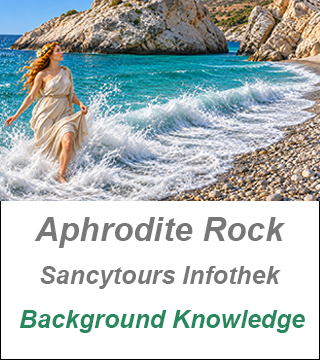 Aphrodite’s Rock in Cyprus is, according to local legend, where the goddess of love and beauty came ashore.
At Petra tou Romiou, waves break against pale limestone and spread white foam across the pebble beach. Look out from the shore and it’s easy to imagine Aphrodite arriving on a shell. Another tale promises eternal youth or true love to anyone who swims around the rock three times.
The Greek name, however, remembers a hero who hurled rocks into the sea.
Where is Aphrodite’s Rock?
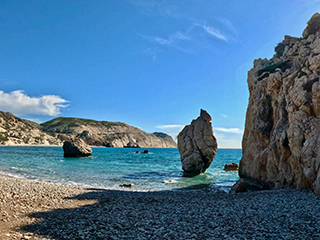 Petra tou Romiou lies on the southwest coast of Cyprus, between Paphos and Limassol. From the shore, you can see several rock formations and the way they break up the line of the coast. On days with a swell, watch from the beach as the waves split around the rocks. The foam is part of what makes the old story so easy to picture here.
From sea foam to the shores of Cyprus
 In Hesiod’s Theogony, Aphrodite forms in sea foam and reaches the island of Cythera first. From there, she travels to Cyprus. As she steps ashore, grass springs up beneath her feet.
Hesiod names Cyprus but gives no exact landing place. However, local tradition places her arrival at Petra tou Romiou, where she is said to have come ashore on a shell. There’s also a story about the spray itself. When a wave breaks high against the rocks, some say you can glimpse the outline of a woman before the foam falls away.
What happens if you swim around Aphrodite’s Rock three times?
 Local legend promises eternal youth and beauty to anyone who swims around Aphrodite’s Rock three times. In other versions, the reward is true love, good luck or fertility. The prize changes with the telling, but the three laps stay the same.
It’s a fitting tale for the place where Aphrodite, the goddess of love and beauty, is said to have come ashore. Her own story begins in the waves. In this one, the swimmer takes a turn in the very same water.
How Petra tou Romiou got its name
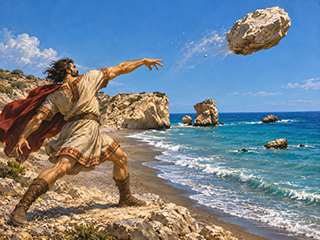 Petra tou Romiou means “Rock of the Greek”. The name refers to Digenis Akritas, a legendary hero from Byzantine storytelling. According to local tradition, Digenis hurled huge rocks into the sea to drive off attackers. The boulders along the coast are said to be the ones he threw.
As a result, the same coastline is associated with two different legends. The sea foam recalls Aphrodite’s arrival, while the rocks themselves explain the name people use in Greek.
Aphrodite’s ancient sanctuary at Kouklia
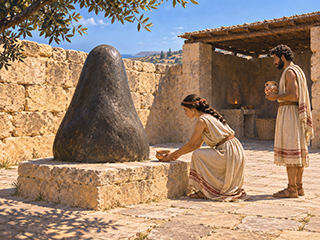 A short way inland, the village of Kouklia holds the remains of Palaipafos, or Old Paphos. Here, people worshipped Aphrodite at a sanctuary that now forms part of the UNESCO World Heritage Site of Paphos.
The sanctuary offers a detail you might not expect. Worshippers represented the goddess with a conical stone. Today, you can see the stone in the site museum. It’s a tangible piece of the island’s history to put alongside the legend you hear at the coast.
Aphrodite’s Rock Photo Gallery
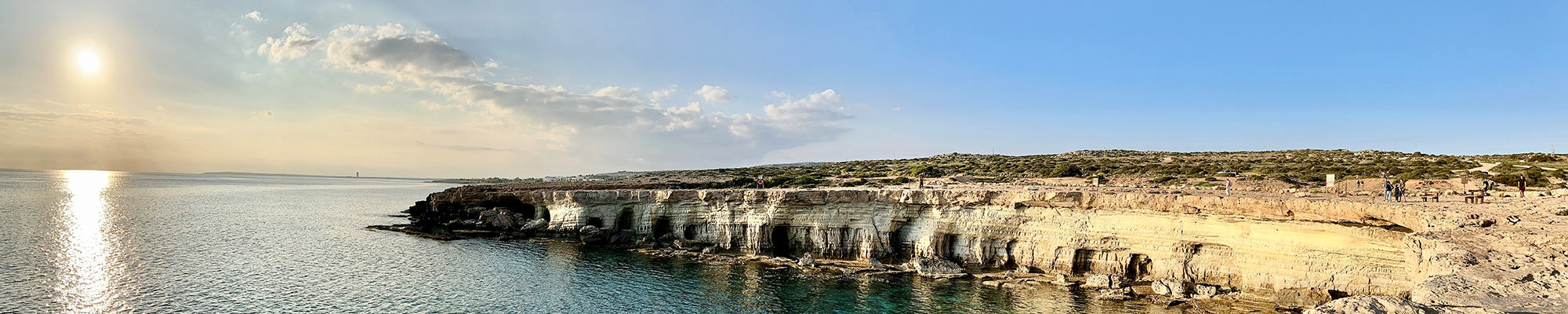
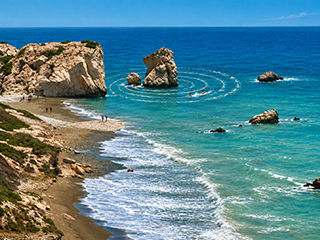
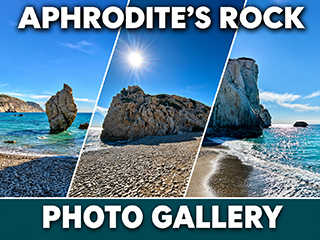 See Petra tou Romiou from the pebble beach and from above. Our photos show the smaller rocks just offshore, sunlight glinting on the turquoise water and waves washing over the pebbles.
From above, you can see how the shoreline curves around the rock formations.
Book Your Private Adonis Baths and Aphrodite’s Rock Tour
 Join us for a private day out that takes you from the coast at Petra tou Romiou to the waterfall at Adonis Baths. We’ll show you both places and share the stories that connect them.
Your tour is exclusively for you and the people you book with, so there’s time to enjoy each stop together.
Author: Jürgen Derichs am 16. Nov 2026 15:24, category: Infothek – Nature of Cyprus, comments per feed RSS 2.0, comments closed.