




Kyrenia Cyprus – discover the old town and fortress with a private guide
 Kyrenia Cyprus is one of the most fascinating destinations in the Eastern Mediterranean. Combining over 2,500 years of history, a world-famous harbour, impressive medieval fortifications, and a unique cultural heritage, Kyrenia Cyprus stands as the historical and tourism centre of Northern Cyprus.
For visitors, historians, photographers, and culture enthusiasts alike, Kyrenia Cyprus offers far more than beautiful scenery. It is a living museum where ancient civilizations, medieval kingdoms, maritime trade routes, and modern Mediterranean life converge.
The Origins of Kyrenia Cyprus – More Than Two Millennia of History
The history of Kyrenia Cyprus reaches back to antiquity. Archaeological evidence suggests that settlements existed in the area as early as the 10th century BC. Ancient Greek colonists are believed to have established the first organized community, naming it “Keryneia” after a region in Achaea, Greece.
Due to its naturally sheltered bay, Kyrenia Cyprus quickly developed into an important maritime centre. Throughout the Classical, Hellenistic, Roman, and Byzantine periods, the harbour served as a strategic trading point connecting Cyprus with the wider Mediterranean world.
Unlike many other coastal settlements that were repeatedly destroyed by invasions, Kyrenia Cyprus maintained continuous habitation. This continuity allows modern visitors to discover traces of numerous civilizations within a relatively compact area.
Why Kyrenia Cyprus Became a Strategic Mediterranean Harbour
The geographical position of Kyrenia Cyprus played a crucial role in its development. Situated along major maritime trade routes linking Europe, Asia Minor, the Levant, and North Africa, the harbour became an essential stop for merchants, sailors, and naval forces.
For centuries, ships carrying olive oil, wine, grain, ceramics, copper, and luxury goods anchored in Kyrenia Cyprus. The harbour provided protection from storms and enabled efficient trade between Cyprus and neighbouring regions.
The prosperity generated by maritime commerce transformed Kyrenia Cyprus into one of the most important ports on the island. Even today, the harbour remains the symbolic heart of the city and one of the most photographed locations in the Eastern Mediterranean.
Kyrenia Harbour – The Timeless Heart of Kyrenia Cyprus
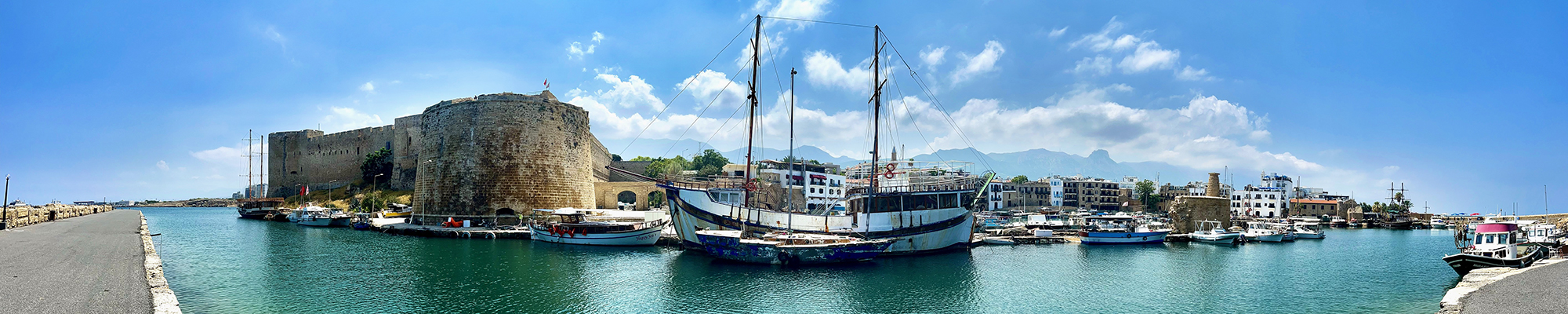
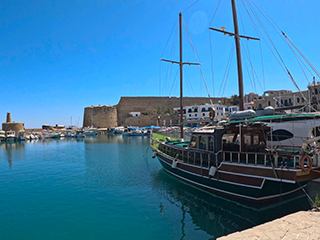
The historic harbour represents the soul of Kyrenia Cyprus. Surrounded by traditional stone buildings, restored warehouses, and waterfront restaurants, the harbour has preserved much of its historic character despite centuries of change.
Visitors strolling along the waterfront can easily imagine the bustling trading activity that once filled the harbour. Fishing boats, sailing yachts, and excursion vessels now occupy the same waters where merchant ships from ancient civilizations once anchored.
The harbour area demonstrates how Kyrenia Cyprus successfully combines historical preservation with contemporary Mediterranean lifestyle. It remains a vibrant meeting point for locals and visitors while maintaining a direct connection to the city’s maritime heritage.
Kyrenia Castle – Guardian of Kyrenia Cyprus
No landmark is more closely associated with Kyrenia Cyprus than the magnificent Kyrenia Castle. Dominating the entrance to the harbour, the fortress has protected the city for centuries.
The earliest fortifications were established during the Byzantine period, primarily to defend Kyrenia Cyprus against Arab raids. Later, the Lusignans expanded the castle significantly, while the Venetians transformed it into the massive fortress visible today.
The strategic importance of Kyrenia Cyprus can be understood through the castle’s impressive defensive architecture:
- Thick defensive walls
- Circular artillery towers
- Strategic sea-facing fortifications
- Elevated observation positions
- Internal military quarters and storage facilities
Throughout its history, Kyrenia Castle witnessed numerous conflicts involving Byzantines, Crusaders, Venetians, Ottomans, and other powers competing for control of the Eastern Mediterranean.
Today, the castle remains one of the best-preserved medieval fortifications on the island and a symbol of Kyrenia Cyprus.
The World-Famous Kyrenia Shipwreck
Among the most significant archaeological discoveries associated with Kyrenia Cyprus is the famous Kyrenia Shipwreck.
Discovered off the coast in 1965, the vessel dates to approximately 300 BC and represents one of the most important ancient shipwrecks ever recovered from the Mediterranean. The remarkably preserved merchant ship carried cargo including:
- Almonds
- Wine amphorae
- Millstones
- Everyday trading goods
The shipwreck provided archaeologists with unprecedented insights into ancient Mediterranean trade, shipbuilding techniques, and commercial networks.
For historians, the Kyrenia Shipwreck serves as powerful evidence of the central role Kyrenia Cyprus played within ancient maritime commerce. Replicas and exhibitions related to the vessel continue to attract scholars and visitors interested in maritime archaeology.
Medieval Kyrenia Cyprus Under the Lusignans
The medieval period marked a particularly important chapter in the development of Kyrenia Cyprus.
After the Crusades, the French Lusignan dynasty established control over Cyprus and invested heavily in strengthening coastal defences. During this period, Kyrenia Cyprus became an important administrative and military centre.
The Lusignans expanded fortifications, encouraged trade, and integrated Kyrenia Cyprus into broader European political and economic networks. Many architectural elements visible today still reflect this medieval influence.
The town became a gateway through which European merchants, pilgrims, nobles, and soldiers entered Cyprus, contributing significantly to its cultural diversity.
Venetian Rule and the Fortification of Kyrenia Cyprus
In the late 15th century, Cyprus came under Venetian control. Recognizing the strategic importance of Kyrenia Cyprus, the Venetians modernized the castle to withstand emerging artillery technology.
Massive defensive improvements transformed the fortress into one of the strongest military positions on the island. Although the Ottomans eventually captured Cyprus in 1571, many Venetian modifications remain visible today.
The Venetian period highlights how crucial Kyrenia Cyprus was for controlling maritime routes throughout the Eastern Mediterranean.
Ottoman Heritage in Kyrenia Cyprus
Under Ottoman administration, Kyrenia Cyprus entered a new phase of development. While military importance gradually declined, the city remained an active regional port.
Ottoman influence can still be seen throughout Kyrenia Cyprus, particularly in:
- Traditional architecture
- Religious buildings
- Urban planning
- Cultural customs
- Culinary traditions
Many historic houses in the old town reflect Ottoman design principles, featuring enclosed courtyards, wooden balconies, and characteristic stone construction adapted to the Mediterranean climate.
British Rule and the Transformation of Kyrenia Cyprus (1878–1960)
A new chapter in the history of Kyrenia Cyprus began in 1878 when the administration of Cyprus was transferred from the Ottoman Empire to Great Britain. Under British rule, Kyrenia Cyprus gradually evolved from a traditional harbour town into a modern administrative and commercial centre.
The British invested in infrastructure, roads, public services, and education, helping to connect Kyrenia Cyprus more closely with the rest of the island. The harbour continued to serve local trade and fishing activities, while the surrounding countryside remained largely agricultural.
During this period, many public buildings, schools, and administrative structures were established. British influence can still be identified in aspects of urban planning, legal institutions, and architectural details found throughout Kyrenia Cyprus.
In 1925, Cyprus officially became a Crown Colony of the British Empire, remaining under British administration until the island gained independence in 1960.
Independence and Growing Intercommunal Tensions
Following independence in 1960, the Republic of Cyprus was established as a bi-communal state shared by Greek Cypriots and Turkish Cypriots. Like many other regions of the island, Kyrenia Cyprus experienced increasing political tensions during the 1960s.
While daily life continued for many residents, disputes over governance, representation, and constitutional arrangements led to periods of instability. The city remained an important coastal centre, but the political situation on the island became increasingly complex.
The Events of 1974 and the Division of Cyprus
The most significant turning point in the modern history of Kyrenia Cyprus occurred in 1974.
In July 1974, a coup d’état supported by the military government in Greece sought to unite Cyprus with Greece. In response, Türkiye launched a military intervention, citing its role as a guarantor power under the 1960 agreements.
The first Turkish forces landed near the coast west of Kyrenia Cyprus, in an area now known as the “Five Mile Beach” region. The operation quickly brought Kyrenia Cyprus under Turkish control, making the city one of the first major locations affected by the conflict.
The events of 1974 led to the displacement of thousands of people from both communities and ultimately resulted in the division of Cyprus into northern and southern administrations. These developments profoundly shaped the future of Kyrenia Cyprus and remain an important part of the island’s contemporary history.
From Kyrenia to Girne – The Modern Era
Since 1974, Kyrenia Cyprus has been administered by the Turkish Cypriot authorities and is commonly known by its Turkish name, Girne.
Over the following decades, Girne developed into the economic and tourism centre of Northern Cyprus. Significant investments transformed the city into a modern destination while preserving many of its historic landmarks.
Today, visitors exploring Kyrenia Cyprus, or Girne, encounter a city where multiple historical narratives coexist. The harbour, castle, churches, mosques, Ottoman houses, British colonial buildings, and modern developments together illustrate the complex history that has shaped the region.
The city has grown substantially since the 1970s, expanding beyond its historic core into surrounding coastal and mountain areas. Nevertheless, the old harbour and Kyrenia Castle remain the defining symbols of Kyrenia Cyprus, attracting visitors from around the world.
Kyrenia Cyprus Today – A City Between History and Modernity
Modern Kyrenia Cyprus represents a unique blend of ancient heritage and contemporary Mediterranean life. Known internationally for its harbour, castle, universities, tourism industry, and cultural diversity, the city continues to play a central role in the development of Northern Cyprus.
While the political status of the island remains unresolved, Kyrenia Cyprus has established itself as one of the Eastern Mediterranean’s most important tourism destinations. Visitors are drawn not only by its natural beauty but also by the remarkable historical journey that spans Ancient Greece, Rome, Byzantium, the Crusader Kingdoms, Venice, the Ottoman Empire, the British colonial period, and the modern era of Girne.
Mountain Castles Above Kyrenia
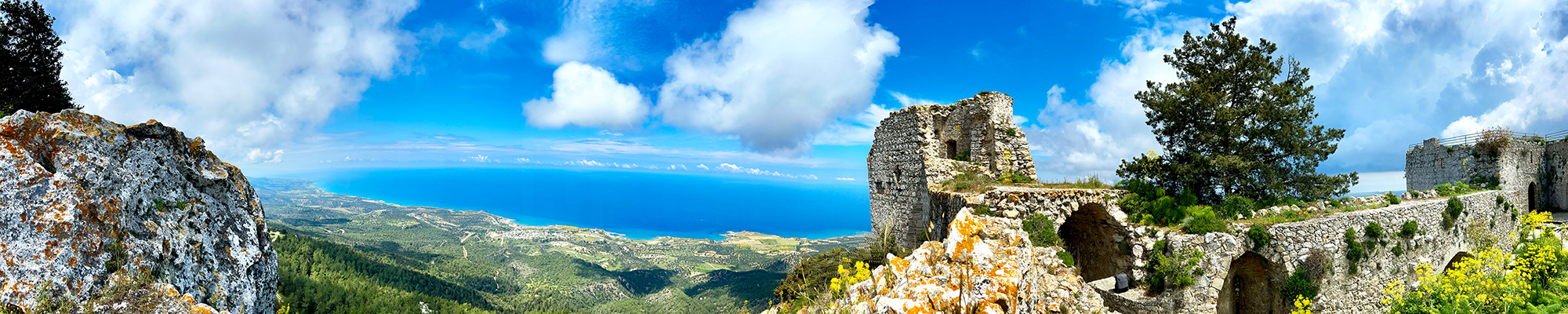
Rising above the town, the Kyrenia mountain range adds dramatic depth to the landscape of Kyrenia Cyprus. Among its peaks stands the legendary St. Hilarion Castle, once a monastery and later a fortified stronghold and royal residence. From its heights, sweeping views extend across Kyrenia Cyprus, the coastline and inland plains.
These mountain fortresses once formed part of a defensive chain protecting the region and today offer some of the most impressive viewpoints in Northern Cyprus.
Bellapais Abbey & Cultural Surroundings
Just outside Kyrenia, the Gothic ruins of Bellapais Abbey provide another layer of medieval heritage. Surrounded by cypress trees and stone terraces, the abbey reflects the religious and cultural life that once flourished in the hills above Kyrenia Cyprus. Its peaceful setting contrasts beautifully with the lively harbour below.
Why Kyrenia is a Must-See Destination
Visitors to Kyrenia Cyprus discover more than a coastal town. They encounter a living museum where castles, monasteries, harbours and mountain paths tell stories of conquest, trade and everyday life across centuries. The atmosphere of Kyrenia invites slow exploration, reflection and curiosity.
Visit Kyrenia Cyprus with SancyTours
Kyrenia Cyprus can be explored perfectly with SancyTours on a private, tailor-made tour, allowing you to experience the harbour, castles and surrounding landscapes at your own pace.
Whether you combine your Kyrenia Cyprus tour with Bellapais Abbey, St. Hilarion Castle or other highlights of Northern Cyprus, your day will be private, flexible and deeply immersive — far beyond standard sightseeing.
Kyrenia can be explored perfectly with SancyTours on a private, tailor-made tour, allowing you to experience the harbour, historic sites and surrounding landscapes at your own pace.

Author: Jürgen Derichs am 7. Mar 2024 13:24, category: Infothek Cities and Villages, comments per feed RSS 2.0, comments closed.