


St. Hilarion Castle Cyprus – private tour to the mighty castle in Cyprus
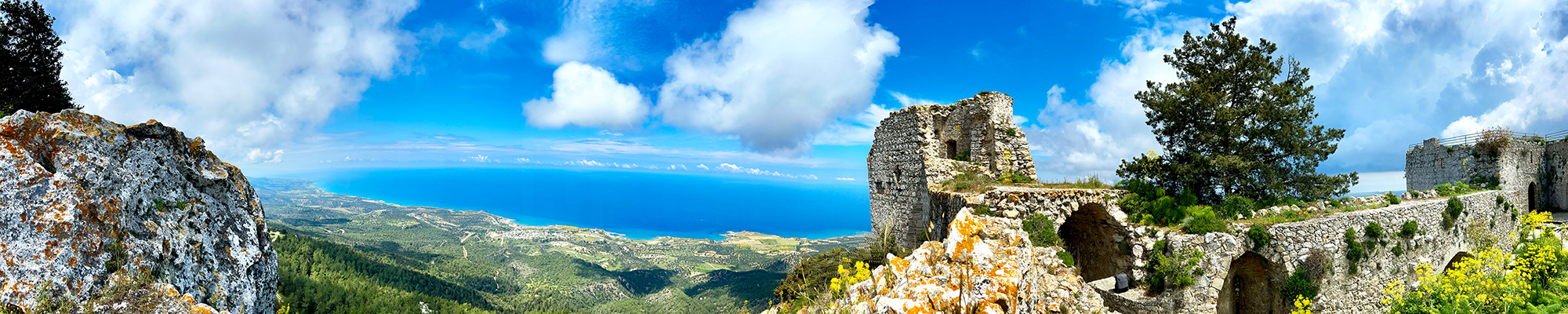
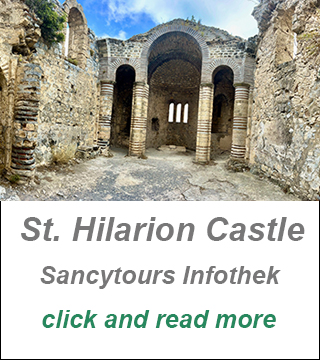 St. Hilarion Castle Cyprus stands at 732m and is very well preserved. Walls and towers seem to grow randomly out of the rock, giving the castle a fairytale appearance. It is even said that Walt Disney used it as a model for the castle in Snow White and the Seven Dwarfs.
The castle is named after a hermit who fled Palestine in the 7th century to live up here and rid the mountain of pagan demons. The story goes that the hermit was deaf and so easily resisted the seductive calls of the demons that haunted the mountain. Eventually the demons gave in and left Hilarion and the mountain alone.
A Byzantine monastery and later a fortress were built around his tomb.
St. Hilarion Castle – The Legendary Mountain Fortress of Northern Cyprus
High above the northern coastline of Cyprus, perched dramatically on the rugged peaks of the Kyrenia Mountain Range, St. Hilarion Castle is one of the most spectacular and fascinating historical sites in the Eastern Mediterranean. Combining breathtaking views, medieval architecture, legends, and centuries of history, St. Hilarion Castle is widely regarded as one of the most beautiful castles in Cyprus and one of the best-preserved mountain fortresses of the former Byzantine world.
Overlooking the coastal city of Kyrenia and the sparkling Mediterranean Sea far below, St. Hilarion Castle attracts visitors from around the world who come to explore its towers, defensive walls, royal chambers, and stunning mountain scenery.
St. Hilarion Castle and the Early Christian Origins
The story of St. Hilarion Castle begins long before the medieval period. During the early Christian era, a hermit monk known as Saint Hilarion is believed to have lived in the mountains overlooking the northern coast of Cyprus. Seeking solitude and a life devoted to prayer, he settled in this remote location, eventually inspiring the construction of a monastery that carried his name.
Over time, the monastery became an important religious centre, attracting monks and pilgrims from across the island. Although little remains of the original religious buildings, the spiritual origins of St. Hilarion Castle remain an important part of its identity.
St. Hilarion Castle During the Byzantine Era
By the 10th and 11th centuries, Cyprus faced increasing threats from Arab raids and maritime attacks. Recognising the strategic importance of the mountain peak, the Byzantines transformed the monastery into a fortified stronghold.
During this period, St. Hilarion Castle became part of a defensive network together with Buffavento Castle and Kantara Castle. These three mountain fortresses protected the northern coastline and provided early warning of approaching enemy fleets.
The Byzantines constructed defensive walls, watchtowers, gates, and military positions, laying the foundation for the castle visitors see today.
St. Hilarion Castle Under the Lusignan Kings
The golden age of St. Hilarion Castle began after the Crusades when Cyprus came under the rule of the French Lusignan dynasty.
Unlike many purely military fortresses, St. Hilarion Castle evolved into a royal residence. The Lusignan kings expanded and beautified the complex, adding living quarters, reception halls, courtyards, chapels, and royal apartments. The castle served both as a defensive fortress and as a mountain retreat for the royal family.
Many of the most impressive remains visible today date from this period. The elegant layout, sophisticated architecture, and strategic design illustrate the wealth and power of the medieval Kingdom of Cyprus.
St. Hilarion Castle and Medieval Life
At its height, St. Hilarion Castle functioned as a small fortified community. The lower section housed soldiers, stables, kitchens, storage rooms, and workshops necessary to support daily life within the fortress.
The middle section contained administrative buildings, living quarters, and religious structures. Meanwhile, the upper section served as the most secure area of the castle, containing royal apartments and defensive towers.
The castle’s design allowed its inhabitants to withstand lengthy sieges while maintaining communication with surrounding territories.
St. Hilarion Castle During Venetian Rule
When the Republic of Venice gained control of Cyprus in 1489, military technology had already begun to change. The introduction of powerful artillery reduced the effectiveness of mountain fortresses such as St. Hilarion Castle.
The Venetians focused their defensive efforts on coastal fortifications, particularly in Famagusta and Nicosia. As a result, St. Hilarion Castle gradually lost its strategic importance and was eventually abandoned as an active military installation.
Fortunately, its remote mountain location helped preserve much of the structure for future generations.
The Architecture of St. Hilarion Castle
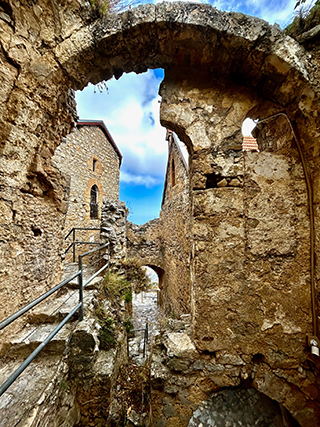
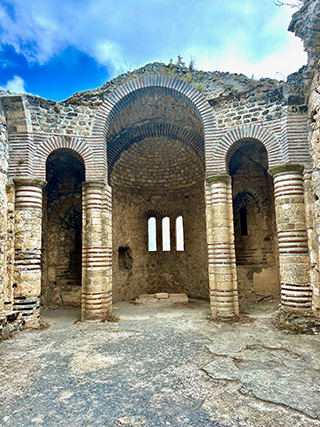
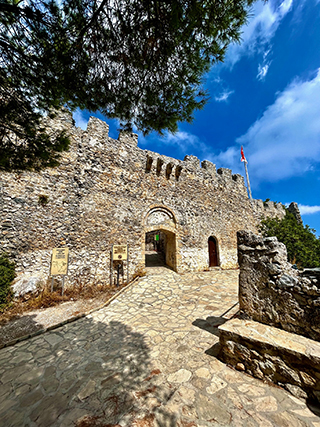
One of the reasons St. Hilarion Castle fascinates visitors is its extraordinary architecture. Built directly into the mountain landscape, the castle follows the contours of the rocky terrain rather than imposing a rigid geometric design.
Visitors can explore:
- Defensive walls and towers
- Royal apartments
- Medieval courtyards
- Guard rooms
- Water cisterns
- Chapel remains
- Observation points
- Ancient stairways connecting the three levels
The higher visitors climb within St. Hilarion Castle, the more spectacular the views become.
The Famous Queen’s Window of St. Hilarion Castle
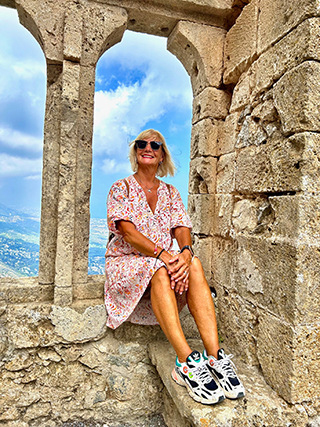
Among the most photographed locations in St. Hilarion Castle is the famous Queen’s Window.
This elegant opening in the castle walls frames a breathtaking panorama of the Mediterranean Sea, Kyrenia, and the surrounding mountains. It has become one of the most iconic viewpoints in Northern Cyprus and is a favourite spot for photographers and visitors alike.
Legends and Mysteries of St. Hilarion Castle
Like many medieval fortresses, St. Hilarion Castle is surrounded by myths and legends.
According to local folklore, a beautiful queen once lived within the castle and lured young men to her chambers before pushing them from the cliffs below. While historians consider the story to be a legend, it adds an air of mystery and romance to the already dramatic atmosphere of St. Hilarion Castle.
The castle’s isolated mountain setting and medieval ruins continue to inspire stories and imagination centuries after its abandonment.
Discover St. Hilarion Castle with SancyTours
The best way to experience St. Hilarion Castle is on a private tour with SancyTours. Without the pressure of large tour groups, you can explore St. Hilarion Castle at your own pace while your private guide shares fascinating stories about Byzantine monks, Crusader kings, medieval battles, and local legends.
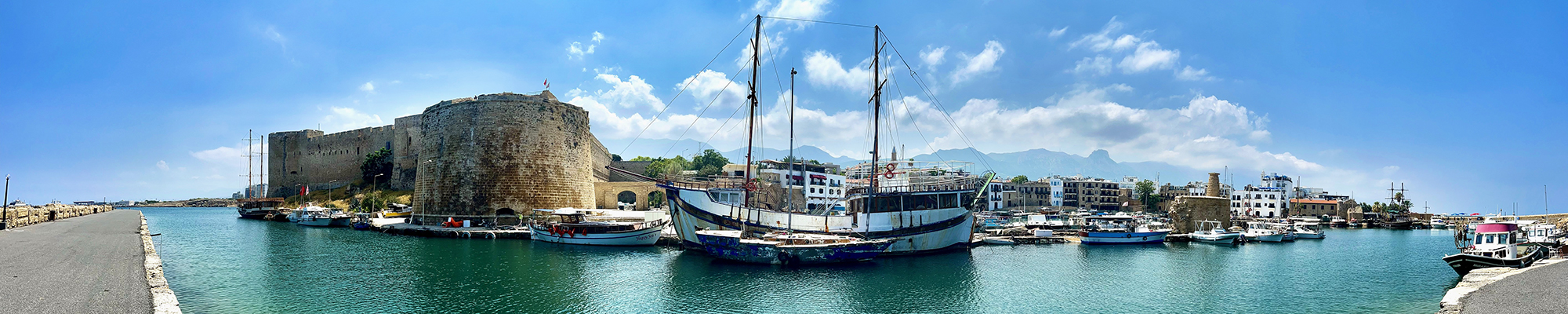
A visit to St. Hilarion Castle can be perfectly combined with the historic harbour city of Kyrenia, the beautiful Bellapais Monastery, the impressive Kyrenia Castle, or the Peace and Freedom Museum. Together, these attractions provide a comprehensive insight into the history, culture, and landscapes of Northern Cyprus.
With SancyTours, every excursion is individually tailored to your interests, ensuring a relaxed, informative, and memorable day exploring one of the most extraordinary castles in the Mediterranean.
Author: Jürgen Derichs am 5. Mar 2024 14:53, category: Infothek – Historical Sites, comments per feed RSS 2.0, comments closed.