




Cedar Valley in Cyprus – The Cyprus Cedar and Its Mountain Forest
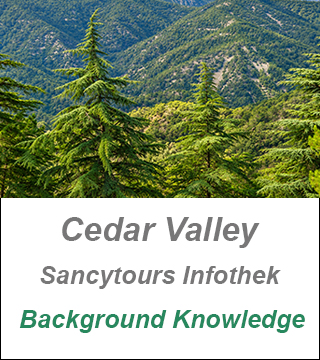 Look up at an old cedar and its branches seem to form a series of shelves. Sunlight catches the tips, while the trunk stands in deep shade.
A younger tree nearby may have a neat, pointed crown and look like a different species altogether.
However, both can be Cyprus cedars. Their needles offer a better clue than their silhouettes.
Once you know what to look for, a walk among these trees becomes a chance to recognise one of the island’s rarest forest landscapes.
Where Is Cedar Valley in Cyprus?
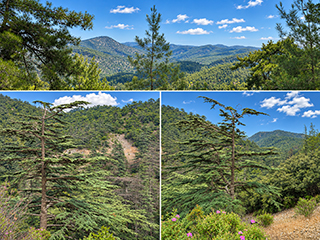 Cedar Valley lies in Paphos Forest, in the western Troodos Mountains. The mountain road between Panagia and Kykkos Monastery passes through the area. As you approach, wooded ridges stretch into the distance. The cedars themselves, however, grow naturally in a surprisingly small part of this landscape.
Their native forest is concentrated around Mount Tripylos, at elevations of roughly 900 to 1,400 metres. Cedar Valley gives visitors a chance to see the trees within that natural range. Afterwards, you can follow the forest road to Stavros tis Psokas and visit the mouflon enclosure.
What Makes the Cyprus Cedar Special?
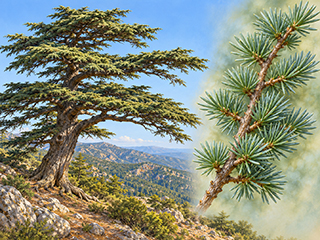 The Cyprus cedar (Cedrus brevifolia) grows naturally only on Cyprus. It is closely related to the cedar of Lebanon. Its scientific name means “short-leaved”, and those short needles are one of its most useful features. Look closely at a twig and you can see many needles growing together in small tufts.
Then step back and look at the tree as a whole. An older cedar often carries broad, spreading branches, with clear gaps between the layers. On an open slope, you can trace an individual branch from the trunk almost to its tip. In a crowded stand, the same outline is much harder to see.
Are There Different Types of Cedar in the Valley?
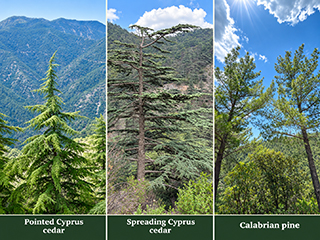 The valley’s native cedars belong to one local species, the Cyprus cedar. Much of the apparent variety comes from age and growing conditions. For example, young cedars often have a pointed crown. In contrast, older cedars often develop a broad crown, especially where their branches have room to spread.
There is another reason the canopy looks so varied. Calabrian pine (Pinus brutia) grows alongside the cedars. Its needles are longer and grow in pairs, so a low branch offers a simple way to tell the two apart. Look for short tufts on the cedar and longer pairs on the pine.
Golden Oak Beneath the Cedars
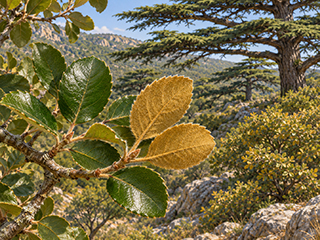 Some of the most distinctive leaves in Cedar Valley grow below the conifers. The golden oak (Quercus alnifolia) is another plant native only to Cyprus. At first glance, its leaves look dark green. Underneath, however, a fine covering of golden hairs gives the oak its English name.
Look for a leaf that has turned over naturally, or watch a low branch when the breeze catches it. As a result, you can see the dark green upper surface and the golden underside side by side. Together, golden oak, Calabrian pine and Cyprus cedar give the valley three quite different kinds of foliage to spot on the same walk.
Where to See the Cyprus Mouflon
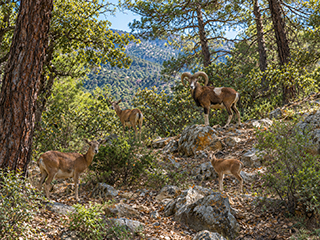 The forest station at Stavros tis Psokas adds a wildlife stop to a day in Cedar Valley. Here, an enclosure gives visitors a chance to observe the Cyprus mouflon, the island’s wild sheep. Take a moment to look between the trunks and rocks. A brown coat can blend into the woodland, even when the animal is quite close.
An adult ram is easier to recognise once it turns its head and shows its curved horns. For more about the animals themselves, our separate Infothek article on the Cyprus mouflon covers their appearance, history and forest habitat.
Troodos Photo Gallery
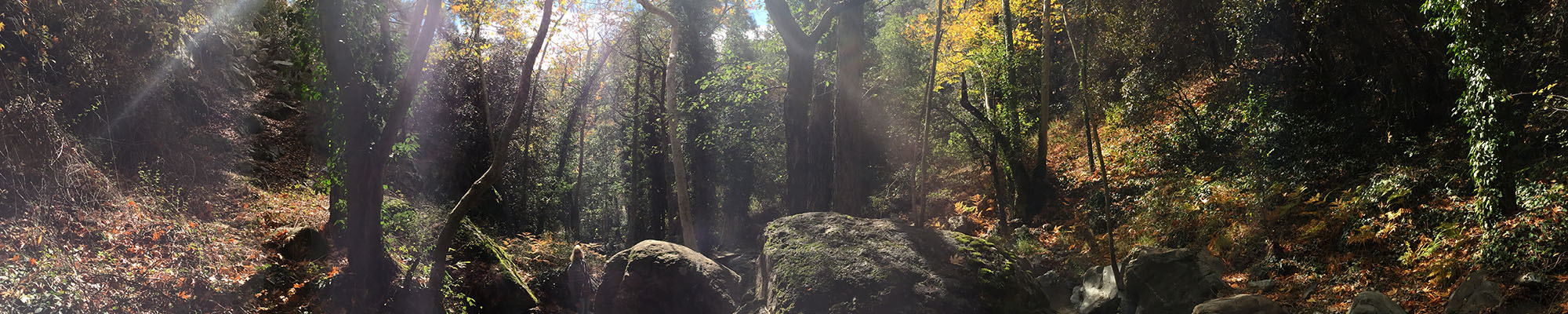
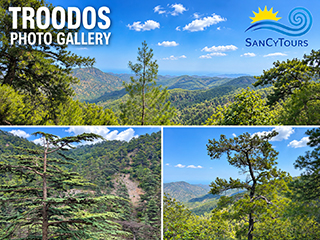 Cedar Valley shows one particular corner of the Troodos Mountains. Our photo gallery takes you farther through the range, from forested slopes to the villages tucked between them. Look at the wider views first, then pick out the details that interest you most. From a distance, a hillside can look like one continuous stretch of green. After a closer look at the cedars, you may find yourself noticing the shapes of individual trees in the photographs, too.
Request a Private Cedar Valley Tour
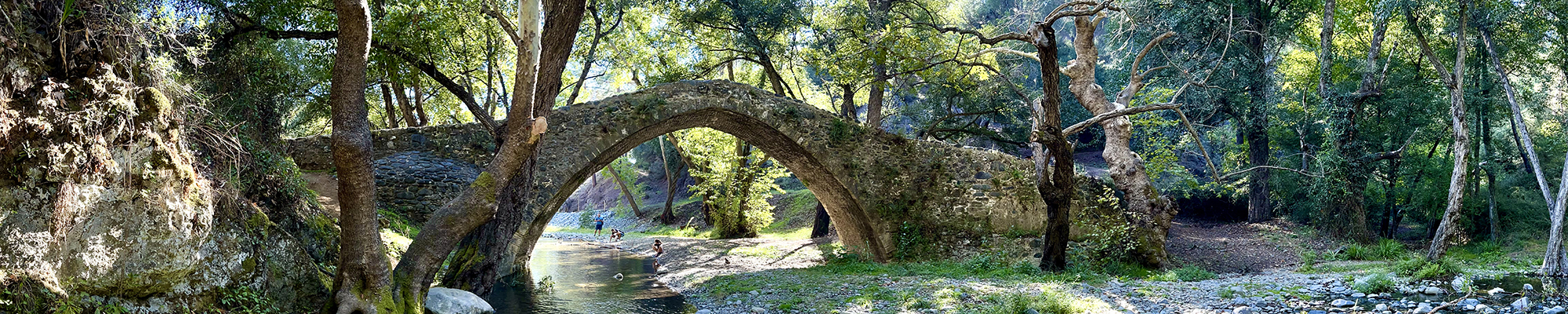
 Would you like to see the Cyprus cedars and visit the mouflon enclosure at Stavros tis Psokas? We arrange this mountain tour on request. You can make the forest the focus of your day or combine it with Kykkos Monastery. If you enjoy old stone bridges, another option is a route taking in the medieval Elia and Tzelefos bridges.
Tell us your preferred date, how many people will join and which places you would like to visit. We’ll use those details to plan the route and prepare an individual offer for your group.
Request Your Cedar Valley Tour service@sancytours.com
Author: Jürgen Derichs am 22. Nov 2026 10:00, category: Infothek – Nature of Cyprus, comments per feed RSS 2.0, comments closed.