


Larnaca Salt Lakes – From Ancient Harbour to Flamingo Wetland
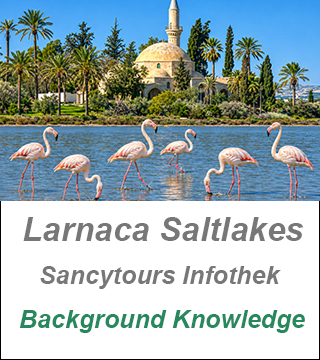 The Larnaca Salt Lakes lie beside the airport, where a former coastal lagoon now changes with the seasons.
In winter, rain fills the shallow basins, and Greater Flamingos may gather to feed. By summer, the water often disappears, leaving a white crust of salt.
However, the lakes also tell a human story. Bronze Age ships once reached a trading town near today’s Dromolaxia. Centuries later, people harvested salt from the exposed lakebed and exported it from Cyprus.
How the Larnaca Salt Lakes Formed
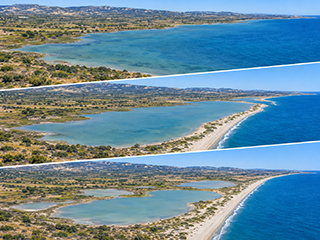 Thousands of years ago, the sea reached farther inland along this stretch of coast. Over time, sand and other sediments built up and narrowed the opening to the Mediterranean. As a result, the lagoon gradually lost its open connection to the sea. Today, the Larnaca Salt Lakes form a group of four shallow basins. Aliki is the largest and best known, with Hala Sultan Tekke on its western shore.
Hala Sultan Tekke – A Pilgrimage Site by the Salt Lake
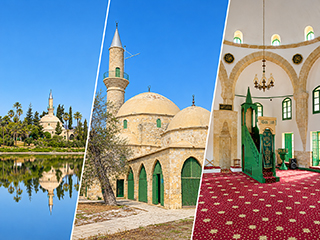 On the western shore of Aliki, the dome and minaret of Hala Sultan Tekke rise above the lakeside trees. The mosque complex grew around the tomb of Umm Haram and remains an important Muslim pilgrimage site. In winter, when the lake fills, the mosque overlooks a broad stretch of shallow water. By late summer, it often looks out over a white salt crust. Our Larnaca Infothek explores the history of the mosque in more detail.
Dromolaxia-Vyzakia – A Bronze Age Harbour
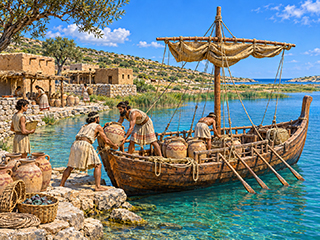 Near today’s Dromolaxia, an important harbour town flourished in the second millennium BC. At the time, the lagoon gave ships access to the settlement. Finds from the Aegean and the eastern Mediterranean show how far its trading connections reached. For example, excavations have uncovered pottery from mainland Greece and jars from the Levant. As sediment narrowed the lagoon’s connection to the sea, the town gradually lost the sheltered access that had made it a good harbour.
Why the Water Comes and Goes
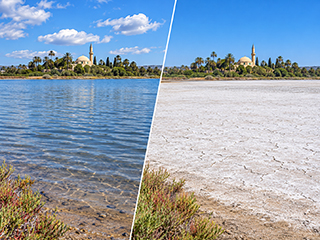 During the cooler months, rain and runoff collect in the low, shallow basins. However, the amount of water varies with each rainy season. As temperatures rise, evaporation overtakes the supply of fresh water. The remaining water becomes saltier until, in many summers, much of the lakebed lies dry. A white layer of salt then forms across the exposed surface. When the rains return, the basins begin to fill and the cycle starts again.
When Larnaca Harvested Salt
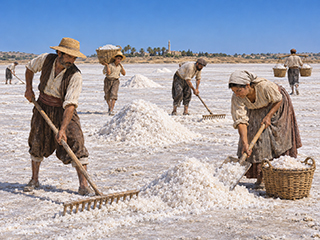 For centuries, people collected the salt left behind by summer evaporation. During the Middle Ages, it became an important Cypriot export. Once the water receded, workers could gather the salt directly from the lakebed. Over time, that seasonal rhythm made the lake part of Larnaca’s working landscape. The last harvest took place in 1986. Today, the white crust still forms in dry summers, revealing the natural process that once supported the trade.
Flamingos and Other Winter Visitors
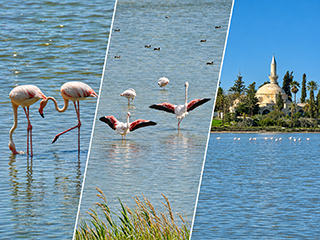 Greater Flamingos are the most striking winter visitors to the Larnaca Salt Lakes. They wade through shallow water and sweep their bills from side to side, filtering tiny food organisms such as brine shrimp. However, their numbers vary with water levels and food availability. Meanwhile, ducks, gulls and shorebirds use different parts of the wetland. Some spend the winter here, while others stop to rest and feed before continuing their migration.
Oroklini Lake – A Wetland for Wintering and Breeding Birds
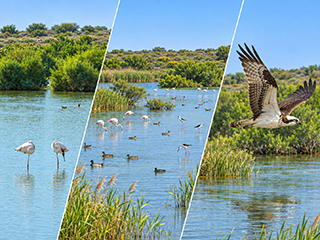 Oroklini Lake lies northeast of Larnaca and is a separate wetland from the airport salt lakes. Its shallow pools, muddy edges and reed beds attract different birds through the seasons. In winter, ducks such as teal and shovelers feed here, and flamingos may visit when water levels suit them. In spring, Black-winged Stilts and Spur-winged Lapwings breed around the lake. Although water management helps retain water, the wetland can still dry out in late summer.
Larnaca Photo Gallery
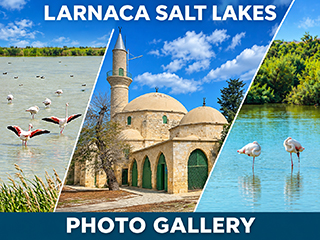 Our Larnaca photo gallery takes you from the city’s streets and seafront to the landscapes beyond the centre. At the Salt Lake, rain and evaporation can make the same shoreline look very different from one visit to the next. In winter, shallow water opens up the view towards Hala Sultan Tekke. Later in the year, the exposed lakebed reveals the patterns left behind as the water recedes. The gallery brings this side of Larnaca together with its historic landmarks.
Book Your Private Larnaca Tour
 Larnaca Salt Lake and Hala Sultan Tekke are part of our private Larnaca tour with SancyTours. Along the way, we connect the changing landscape of the lake with the city’s history and religious heritage. In winter, we can also look for flamingos when water levels and feeding conditions bring them to the lake. Your guide is there exclusively for you and your companions, so there’s time for questions and photos. To arrange your visit, email us at service@sancytours.com.
Author: Jürgen Derichs am 19. Nov 2026 12:32, category: Infothek – Nature of Cyprus, News from our tours and events, comments per feed RSS 2.0, comments closed.