



Cyprus Mining History – Colourful Lakes, Abandoned Mines & Lost Places
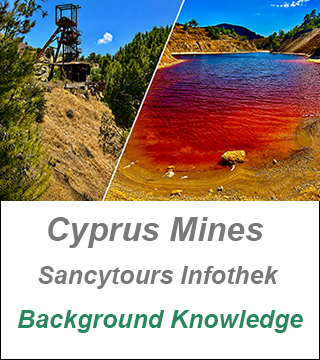 Cyprus has a fascinating story hidden beneath its landscape. Cyprus mining history reaches back thousands of years and is closely connected with copper, minerals and the remarkable geology of the island.
The mineral-rich rocks of Cyprus made the island an important centre of copper production in the ancient world. Over the centuries, mining continued to shape not only the economy and history of Cyprus, but also parts of its landscape.
Today, Cyprus mining history can still be discovered in very different ways. Former mines and quarries, colourful lakes, exposed rock formations and forgotten industrial structures reveal traces of a past that nature is slowly transforming.
Some of these places have developed extraordinary colours and almost surreal scenery, creating a fascinating contrast between geology, industrial heritage and returning nature.
In our Infothek, discover the stories behind these remarkable places, their mining past and the natural processes that continue to change them today.
 Want to see pictures? Click here and visit our Mediathek for pictures and some reels.
Ready to explore them yourself? Book your private tour with SancyTours and discover these extraordinary places in Cyprus with us.
Red Lake Cyprus – History, Mining & the Story Behind Its Red Colour
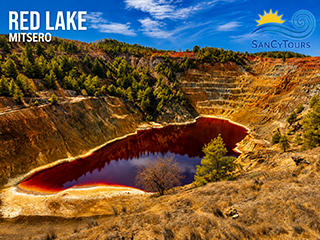 The Red Lake Cyprus, also known as the Mitsero Red Lake, is one of the island’s most extraordinary former mining landscapes.
Its intense red water surrounded by rugged rock may look like an unusual natural phenomenon, but the lake is actually the legacy of decades of mining.
From Mine to Red Lake
The Red Lake lies in the former Kokkinopezoula Mine near Mitsero. Mining began here in the early 1950s, initially underground and later as a large open-pit operation.
The main mineral extracted at Kokkinopezoula was pyrite, also known as iron pyrite, which was commercially valuable because of its high sulphur content. Smaller quantities of chalcopyrite, a copper-bearing mineral, were also present.
Millions of tonnes of ore and rock were removed during the years of operation. As mining moved from underground galleries to surface extraction, blasting and heavy machinery gradually created the enormous excavation that still defines the landscape today.
Mining ended during the second half of the 1960s when further extraction was no longer economically worthwhile.
What remained was a huge open pit – and the beginning of today’s Red Lake.
How Did the Red Lake Form?
After mining stopped, rainwater gradually collected in the abandoned excavation.
But this water came into contact with the exposed mineral-rich rocks of the former mine. Sulphide minerals such as pyrite react with water and oxygen, changing the chemistry of the water and creating highly acidic conditions.
This process, known as acid mine drainage, transformed the abandoned mining pit into the extraordinary lake we see today.
Why Is the Red Lake Red?
The spectacular colour of the Red Lake Cyprus is closely connected to iron-rich minerals and oxidation.
In simple terms, it is a process similar to rust forming on iron. As minerals react with water and oxygen, iron compounds create the characteristic red, orange, rust and ochre colours visible in the water and surrounding rocks.
The appearance of the lake can change depending on rainfall, water levels, sunlight and mineral concentrations. At different times, the water can appear deep reddish-brown, rusty orange or surprisingly vivid red.
Its extraordinary beauty therefore has an unusual origin: the combination of Cyprus’ geology and the effects of former mining activity.
What Happened After the Mine Closed?
The end of mining did not mean that the landscape immediately returned to its original state.
The enormous excavation, exposed mineral-rich rocks and acidic water created difficult conditions for vegetation and wildlife. For many years, the former mining area remained a harsh and heavily altered environment.
But over time, something fascinating began to happen.
Nature started to return.
Vegetation can now be seen spreading around parts of the former mine. Trees, shrubs and grasses increasingly contrast with the exposed rocks and intensely coloured water.
Nature cannot simply erase the enormous changes created by mining, but it is gradually transforming the landscape once again.
A Landscape Shaped by Mining and Nature
Today, the Red Lake Cyprus is much more than a colourful lake or unusual photo location.
The enormous crater tells the story of the people and machinery that once worked here. The red water reveals the continuing interaction between minerals, water and oxygen. And the vegetation slowly returning around the former mine shows how nature adapts to a landscape dramatically changed by human activity.
It is this combination of geology, mining history, extraordinary colours and returning nature that makes the Mitsero Red Lake such a fascinating place to discover.
Kokkinogia Mine Cyprus – Copper Mining, Industrial Relics & Returning Nature
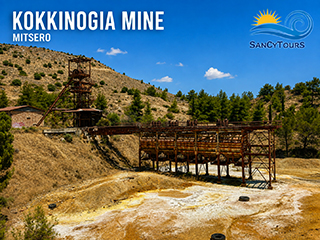 The Kokkinogia Mine Cyprus, also known as Kokkinoyia Mine, is one of the most fascinating remnants of the island’s modern mining era. Hidden in the landscape near Mitsero, the abandoned mine still preserves structures that make its industrial past surprisingly easy to imagine.
Unlike the nearby Red Lake, where a vast open pit dominates the scenery, Kokkinogia was primarily an underground mine. Today, its weathered industrial remains create a striking contrast with the vegetation and surrounding countryside.
What Was Mined at Kokkinogia?
Kokkinogia was an important source of copper-bearing sulphide ore. The deposits contained valuable copper minerals together with large quantities of sulphur-bearing minerals such as pyrite.
During its main period of operation in the 1970s, approximately 481,000 tonnes of ore were extracted. The mined material contained around 2% copper and a high proportion of sulphur.
Some of the copper ore found at Kokkinogia was particularly rich. The geology of the mine includes minerals such as chalcopyrite, chalcocite, bornite and covellite – all associated with copper deposits.
Mining Deep Below the Surface
Most of the mining took place underground.
Miners followed tunnels and galleries into the deposit, extracting the ore beneath the surface. A vertical mine shaft connected the underground workings with the installations above.
The ore was brought to the surface through the mine’s shaft and galleries before being transported for processing. At the Mitsero processing plant, flotation was used to separate and concentrate the valuable minerals.
The resulting copper and sulphur concentrates could then be transported onwards and eventually shipped from Cyprus.
What Can Still Be Seen Today?
This is what makes Kokkinogia Mine Cyprus particularly interesting as a lost place.
Parts of the old mining infrastructure have survived. Most striking is the tall mine headframe, which once stood above the shaft and formed part of the system used to move material between the underground mine and the surface.
Remnants of the old wagon railway can also still be found, together with other industrial structures and traces of the former mining operation.
Standing here today, it is surprisingly easy to imagine a time when wagons, machinery and miners were constantly moving through a landscape that is now largely silent.
Why Did Kokkinogia Mine Close?
By the late 1970s, the economics of copper mining in Cyprus had changed considerably.
Rich deposits had become harder to exploit, production costs were increasing and international copper prices made continued operation increasingly difficult. Kokkinogia finally ceased mining operations in 1979.
The machinery stopped, the workers left and the industrial site began a completely different chapter.
When Nature Takes Over
Since the closure, nature has slowly begun to reclaim Kokkinogia Mine.
Vegetation grows around former industrial structures, metal surfaces have developed layers of rust and the remains of the mine are gradually becoming part of the surrounding landscape.
The contrast is particularly striking: a steel headframe that once symbolised heavy industry now rises above grasses, shrubs and trees.
Unlike a restored industrial museum, Kokkinogia still has the raw atmosphere of a place where time simply moved on.
That combination of copper mining history, abandoned industrial relics and returning nature makes Kokkinogia one of the most fascinating mining landscapes in Cyprus – and an impressive reminder of an industry that once played an important role in the life of the Mitsero region.
Green Lake Cyprus – The Colourful Mining Landscape of Mitsero
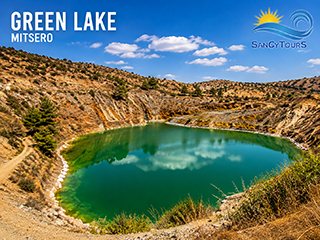 The Green Lake Cyprus near Mitsero is one of the most unusual landscapes in the region. Surrounded by exposed rock, mineral-rich ground and returning vegetation, its striking green and turquoise water creates a fascinating contrast with the rugged scenery around it.
Like many places around Mitsero, the landscape is closely connected to the region’s long mining past.
From Mining Landscape to Green Lake
The area around Mitsero was heavily influenced by mining during the 20th century. Excavation and the removal of enormous quantities of rock dramatically changed parts of the original landscape.
After mining activity ended, water accumulated in former excavated areas and created an entirely new environment.
Today, the Mitsero Green Lake has become one of the most striking reminders of this transformation – a place shaped first by industry and later by water, weather and nature.
Why Is the Green Lake Green?
The extraordinary colour is closely connected to the mineral-rich environment surrounding the lake.
Water interacts with exposed rocks and minerals, while factors such as dissolved substances, suspended mineral particles, water depth, sunlight and reflections all influence the colours we see.
This means the Green Lake does not always look exactly the same.
Depending on the season, weather and light, the water can appear deep green, turquoise or even blue-green. Together with the different colours of the surrounding rocks, this creates an almost surreal landscape.
Mining Changed the Landscape
What makes the Green Lake Cyprus particularly interesting is that the scenery visitors see today was never planned as a natural attraction.
Mining reshaped the terrain. Once industrial activity disappeared, natural processes began transforming it again.
Water occupied the excavated landscape, weather continued to change the exposed rock and vegetation gradually returned to areas that had once been disturbed by mining.
The result is neither a completely natural landscape nor an industrial one.
It has become something in between.
Nature Is Taking Over
Today, plants, shrubs and trees are gradually reclaiming parts of the former mining landscape.
The contrast is particularly striking around the lake: vivid green-blue water, exposed mineral-rich rock and Mediterranean vegetation appear side by side.
Over time, nature softens the traces left by mining without completely hiding them. The shape of the land still reveals its industrial past, while the vegetation and water show how dramatically a place can change once human activity stops.
The Mitsero Green Lake is therefore much more than an unusual colourful lake.
It represents the continuing transformation of a landscape – from geology to mining, from mining to abandonment, and finally to a place slowly being reclaimed by nature.
Together with the Red Lake and the abandoned mining sites around Mitsero, it reveals a fascinating and unexpected side of Cyprus, where mining history, extraordinary colours and returning nature exist within the same landscape.
Sha Mine Cyprus – Mining History, Copper & Abandoned Landscapes
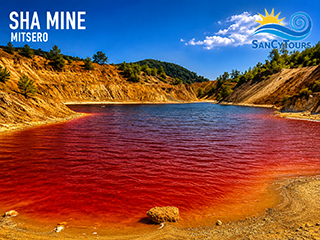 The Sha Mine Cyprus, located in the area between Sha and Mathiatis, is another fascinating reminder of the island’s once important mining industry. Today, the quiet landscape, exposed rocks and traces of former mining activity give little indication of how intensively this area was once worked.
Like many mines in Cyprus, Sha owes its existence to the extraordinary geology of the Troodos region and its rich sulphide deposits.
What Was Mined at Sha Mine?
Mining at Sha focused primarily on pyrite and copper-bearing ores, but the deposits were also associated with gold and silver.
Pyrite was an important raw material at the time because of its high sulphur content. Copper, meanwhile, had been one of Cyprus’ most valuable mineral resources since antiquity.
Gold and silver occurred in smaller quantities within the mineralised deposits and added to the economic interest in the area.
This combination of different minerals made the Sha-Mathiatis region particularly attractive to mining companies during the development of Cyprus’ modern mining industry.
Mining at Sha
Modern mining activity at Sha Mine Cyprus developed during the 1930s. From around 1937, mining companies were exploiting pyrite and metal-bearing deposits in Sha and several other mining areas across Cyprus.
Both underground and open-cast mining methods were used.
Underground galleries allowed miners to follow deposits beneath the surface, while open excavations gradually transformed parts of the landscape above.
Mining on this scale required much more than simply extracting rock. Ore had to be blasted, transported and processed before the valuable minerals could be separated and prepared for further use.
Why Did Mining End?
The decline of Sha Mine was part of a much wider change in the Cypriot mining industry.
From the 1960s and particularly during the 1970s, mining became increasingly difficult economically. Rich deposits were becoming depleted, production costs increased and international metal prices changed.
Pyrite also lost much of its former importance. One of its principal industrial uses had been as a source of sulphur for the production of sulphuric acid, but other sources of sulphur gradually replaced it.
By the end of the 1970s, the fall in copper prices and declining demand for pyrite contributed to the closure of many mining operations across Cyprus.
What Remains Today?
After mining stopped, the Sha landscape entered a very different phase.
The machinery and workers disappeared, but mining had permanently changed the terrain. Excavated areas, exposed mineral-rich rocks and remnants of former workings remained behind.
Weather, erosion and vegetation have since continued reshaping the site.
In some areas, nature is slowly covering traces of human activity; in others, the exposed rocks and altered terrain still clearly reveal the industrial past.
Where Mining History Meets Nature
Today, the Sha Mine Cyprus is interesting precisely because it has not become a polished tourist attraction.
It remains a landscape shaped by several different forces: the geology that created its mineral deposits millions of years ago, the mining industry that extracted them and the natural processes that have continued since the mine fell silent.
Together with the nearby mining landscapes of Mathiatis, Sha provides another fascinating glimpse into a lesser-known side of Cyprus – one where mining history, geology, lost places and returning nature come together.
Mathiatis Mine Cyprus – Colourful Mining Lake, Pyrite & Returning Nature
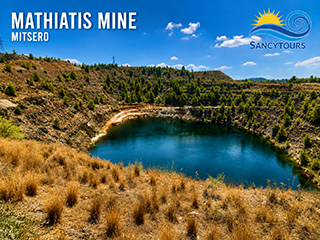 The Mathiatis Mine Cyprus, also known as the North Mathiatis or Kokkinoantonis Mine, is one of the most impressive former mining landscapes on the island.
Today, a huge open pit dominates the site. Water has collected at the bottom of the excavation, creating a colourful mining lake surrounded by steep rock walls, mineral-rich ground and vegetation slowly returning to the landscape.
But this remarkable scenery is the result of decades of mining.
What Was Mined at Mathiatis?
The geology around Mathiatis contains extensive sulphide deposits. The main mineral extracted from the North Mathiatis Mine was pyrite, also known as iron pyrite.
Pyrite was once an important industrial raw material because of its high sulphur content. The ore at Mathiatis contained around 30–35% sulphur, while its copper content was comparatively low.
Copper-bearing minerals were nevertheless present, and the area is also connected with the extraction of gold and silver, particularly during earlier phases of mining.
The deposits therefore attracted the attention of mining companies long before the enormous excavation visible today was created.
From Gold Mining to a Huge Open Pit
Modern exploration around Mathiatis intensified during the 1930s.
Early mining focused partly on gold-bearing material close to the surface. Further geological exploration then revealed a much larger sulphide deposit beneath it, consisting predominantly of pyrite.
In 1965, the Hellenic Mining Company took over the mining lease and began exploiting the deposit on a much larger scale.
The mine was operated as an open-cast mine. As layer after layer of rock was removed, the original excavation became larger and deeper.
Eventually, mining created an enormous crater approximately 350 metres across and around 85 metres deep.
Around two million tonnes of ore were extracted before large-scale mining came to an end.
Why Did Mathiatis Mine Close?
As with many mines in Cyprus, changing economic conditions eventually made continued extraction less attractive.
The international market for pyrite had declined considerably as other sources of sulphur became available. At the same time, relatively low copper concentrations and increasing mining costs made further exploitation less economical.
Mining at Mathiatis ended in the late 1980s, leaving behind the enormous open pit and extensive areas of mining waste.
How Did the Mining Lake Form?
Once mining stopped, the excavation was no longer actively worked or kept dry.
Water gradually accumulated in the deepest part of the open pit and came into contact with the exposed mineral-rich rocks.
The sulphide minerals remaining in the rock continue to react with water and oxygen. These chemical processes influence the acidity and mineral composition of the water and contribute to the unusual appearance of the lake.
Depending on water level, sunlight, weather and mineral concentrations, its colour can vary considerably.
Together with the exposed rock walls, this gives Mathiatis Mine its distinctive and sometimes almost surreal appearance.
Nature Is Slowly Returning
The years after closure have created another fascinating transformation.
Some areas around the former mine remain barren because the mineral-rich spoil and acidic conditions make it difficult for plants to grow. In other areas, however, trees, shrubs and Mediterranean vegetation are gradually returning.
This creates one of the most interesting contrasts at Mathiatis.
Bare mining slopes and colourful rock formations sit directly beside areas where nature is slowly taking back the former industrial landscape.
The transformation is still continuing today.
A Landscape Created by Geology, Mining and Time
The Mathiatis Mine Cyprus is therefore much more than an abandoned quarry with a colourful lake.
Its rocks tell the geological story of Cyprus, while the enormous crater reveals the scale of modern mining. The water and returning vegetation show what happens when an industrial landscape is left to weather, change and gradually become part of nature again.
Today, Mathiatis is a remarkable combination of mining history, colourful water, exposed geology and returning nature – and another example of the unexpected landscapes hidden away from the familiar tourist routes of Cyprus.
Skouriotissa Mine Cyprus – Ancient Copper Mining & a Landscape Shaped by Centuries
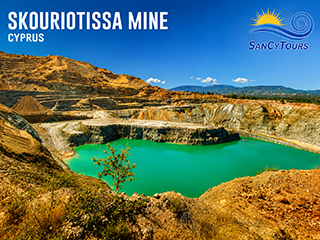 The Skouriotissa Mine Cyprus is one of the most historically important mining sites on the island. Located in the foothills of the Troodos Mountains near the Solea Valley, it represents a remarkable connection between Cyprus’ ancient copper industry and modern mining.
While many former mines on the island tell the story of only a few decades of industrial activity, Skouriotissa belongs to a mining landscape that has been exploited for thousands of years.
What Was Mined at Skouriotissa?
The most important resource at Skouriotissa was copper.
The ore deposits are part of the mineral-rich geology associated with the Troodos ophiolite. Copper occurs within sulphide deposits together with minerals such as pyrite and other metal-bearing minerals.
For the ancient inhabitants of Cyprus, these copper deposits were enormously valuable.
Copper could be extracted from the ore and used for tools, weapons, vessels, jewellery and – when combined with tin – the production of bronze.
This mineral wealth helped make Cyprus one of the Mediterranean’s important centres of copper production in antiquity.
Copper Mining Since Ancient Times
Mining around Skouriotissa dates back to antiquity, and archaeological evidence shows that copper ores were already being exploited in this region thousands of years ago.
Ancient miners had none of the heavy machinery available today. Ore was extracted manually and then processed using techniques that required enormous amounts of physical labour and fuel.
One of the most visible traces of this ancient industry is the huge quantity of slag found around historic mining areas. Slag is the material left behind after ore has been heated and smelted to separate the valuable metal.
These remains provide evidence of the enormous scale of copper production that once took place in Cyprus.
The Beginning of Modern Mining
A new chapter began in the early 20th century.
In 1916, the Cyprus Mines Corporation began developing modern mining operations at Skouriotissa. New machinery, transport systems and industrial processing methods made it possible to extract ore on a scale ancient miners could never have imagined.
The mine subsequently became one of the most important centres of the modern Cypriot mining industry.
Large-scale excavation dramatically transformed the landscape. Hillsides were opened, enormous quantities of rock were moved and extensive mining installations were constructed around the deposit.
A Mine That Refused to Disappear
Skouriotissa differs from many of the other mining sites in Cyprus because its story did not simply end with the decline of the traditional mining industry.
Mining activity changed repeatedly over the decades as deposits, technologies and international copper prices changed.
Different methods were introduced to recover copper even from lower-grade material that would previously have been considered uneconomical.
Modern hydrometallurgical techniques, including leaching and solvent extraction-electrowinning, made it possible to recover copper without relying solely on traditional ore processing methods.
This allowed copper production at Skouriotissa to continue into the modern era.
How Mining Changed the Landscape
Centuries of mining – and particularly the industrial operations of the 20th century – have left unmistakable marks on the area.
Large excavations, terraces, exposed rock, waste material and industrial structures have created a landscape that looks completely different from the surrounding countryside.
The colours are particularly striking. Different minerals and oxidation processes create shades of red, orange, yellow, brown and grey, while vegetation around the mining area provides a strong contrast.
From certain viewpoints, the scale of the excavation makes it possible to understand just how dramatically mining can reshape an entire landscape.
Nature and Industry Side by Side
Unlike abandoned mining sites where nature has had decades to reclaim almost everything, Skouriotissa Mine Cyprus presents a different relationship between nature and industry.
The surrounding mountains remain green and distinctly Mediterranean, while the mining landscape exposes the colourful geology hidden beneath them.
Vegetation gradually returns to disturbed areas where conditions allow it, while other sections remain visibly shaped by mining.
The result is a fascinating contrast between natural landscape, exposed geology and industrial heritage.
A Symbol of Cyprus’ Copper History
Skouriotissa is more than simply another mine.
It represents one of the most important chapters in Cyprus mining history and helps explain why copper has such a special connection with the island.
From ancient miners extracting ore by hand to the enormous excavations and sophisticated processes of modern mining, the landscape around Skouriotissa reflects thousands of years of human interest in the mineral wealth beneath Cyprus.
Today, the Skouriotissa Mine Cyprus offers a remarkable glimpse into this history – a place where ancient copper mining, modern industry, geology and nature come together in one extraordinary landscape.
On the Edge of the UN Buffer Zone
There is another unusual aspect that makes the location of Skouriotissa Mine Cyprus particularly fascinating: the mine lies directly beside the United Nations Buffer Zone, the area separating the southern and northern parts of Cyprus.
The Green Line passes close to the mining landscape, with UN positions and restricted areas forming part of the surroundings.
Just northwest of the mine lies Agios Nikolaos Lefkas, an abandoned village situated inside the UN Buffer Zone. Its inhabitants left during the events of 1974, and the village has remained deserted ever since.
Today, its empty houses and ruins form an extraordinary contrast with the nearby mining landscape. Both places tell very different stories – one shaped by thousands of years of copper mining, the other by the more recent political history of Cyprus.
This unusual location makes Skouriotissa more than a place of geological and industrial interest. Here, ancient mining history, modern Cyprus and the island’s divided past exist remarkably close together.
Author: Jürgen Derichs am 31. Aug 2026 08:58, category: Infothek – Nature of Cyprus, comments per feed RSS 2.0, comments closed.